ABCbiolab
SKU:ABCCS62776
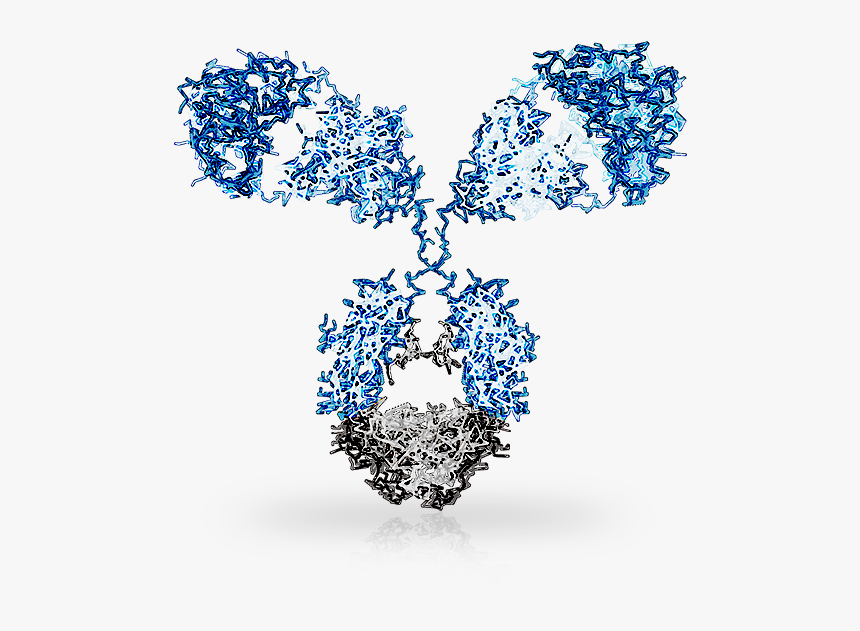
RAG2 Antibody
RAG2 Antibody
Couldn't load pickup availability
Size
100ug
Clone Number
Aliases
RAG 2 antibody; RAG-2 antibody; RAG2 antibody; RAG2_HUMAN antibody; Recombination activating gene 2 antibody; V(D)J recombination activating protein 2 antibody; V(D)J recombination-activating protein 2 antibody
Immunogen Species
Homo sapiens (Human)
UniProt ID
P55895
Immunogen
Recombinant Human V(D)J recombination-activating protein 2 protein (296-415AA)
Raised in
Rabbit
Species Reactivity
Human
Tested Applications
ELISA, IF; Recommended dilution: IF:1:50-1:200
Background
Core component of the RAG complex, a multiprotein complex that mediates the DNA cleavage phase during V(D)J recombination. V(D)J recombination assembles a diverse repertoire of immunoglobulin and T-cell receptor genes in developing B and T-lymphocytes through rearrangement of different V (variable), in some cases D (diversity), and J (joining) gene segments. DNA cleavage by the RAG complex occurs in 2 steps: a first nick is introduced in the top strand immediately upstream of the heptamer, generating a 3\'-hydroxyl group that can attack the phosphodiester bond on the opposite strand in a direct transesterification reaction, thereby creating 4 DNA ends: 2 hairpin coding ends and 2 blunt, 5\'-phosphorylated ends. The chromatin structure plays an essential role in the V(D)J recombination reactions and the presence of histone H3 trimethylated at \'Lys-4\' (H3K4me3) stimulates both the nicking and haipinning steps. The RAG complex also plays a role in pre-B cell allelic exclusion, a process leading to expression of a single immunoglobulin heavy chain allele to enforce clonality and monospecific recognition by the B-cell antigen receptor (BCR) expressed on individual B-lymphocytes. The introduction of DNA breaks by the RAG complex on one immunoglobulin allele induces ATM-dependent repositioning of the other allele to pericentromeric heterochromatin, preventing accessibility to the RAG complex and recombination of the second allele. In the RAG complex, RAG2 is not the catalytic component but is required for all known catalytic activities mediated by RAG1. It probably acts as a sensor of chromatin state that recruits the RAG complex to H3K4me3 (By similarity).
Clonality
Polyclonal
Isotype
IgG
Purification Method
>95%, Protein G purified
Conjugate
Non-conjugated
Buffer
Preservative: 0.03% Proclin 300
Constituents: 50% Glycerol, 0.01M PBS, pH 7.4
Form
Liquid
Stroage
Upon receipt, store at -20°C or -80°C. Avoid repeated freeze.
Target Names
RAG2
Research Areas
Epigenetics and Nuclear Signaling
Share