NSJ Bioreagents
SKU:V9559-20UG
MCP2 Antibody / CCL8, 20 ug
MCP2 Antibody / CCL8, 20 ug
Couldn't load pickup availability
This antimicrobial gene is one of several chemokine genes clustered on the q-arm of chromosome 17. Chemokines form a superfamily of secreted proteins involved in immunoregulatory and inflammatory processes. The superfamily is divided into four subfamilies based on the arrangement of N-terminal cysteine residues of the mature peptide. This chemokine is a member of the CC subfamily which is characterized by two adjacent cysteine residues. This cytokine displays chemotactic activity for monocytes, lymphocytes, basophils and eosinophils. By recruiting leukocytes to sites of inflammation this cytokine may contribute to tumor-associated leukocyte infiltration and to the antiviral state against HIV infection.
Specifications
| Catalog No | V9559-20UG |
|---|---|
| Family | Primary antibody |
| Qty | 20 ug |
| Formulation | 0.2 mg/ml in 1X PBS with 0.1 mg/ml BSA (US sourced), 0.05% sodium azide |
| Format | Purified |
| Clone | CCL8/3312 |
| Host Animal | Mouse |
| Clonality | Monoclonal (mouse origin) |
| Isotype | Mouse IgG2b, kappa |
| Species Reactivity | Human |
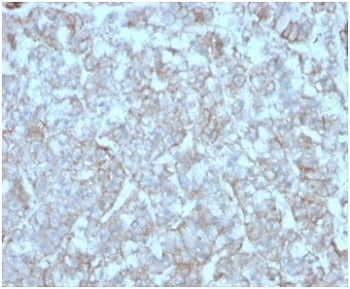
| Application | IHC-P |
| Application Details | Immunohistochemistry (FFPE): 1-2ug/ml |
| Application Note | Optimal dilution of the MCP2 antibody should be determined by the researcher. |
| Localization | Secreted |
| Immunogen | A portin of amino acids 24-98 from the human protein was used as the immunogen for the MCP2 antibody. |
| Purity | Protein A/G affinity |
| Storage | Aliquot the MCP2 antibody and store frozen at -20oC or colder. Avoid repeated freeze-thaw cycles. |
| Limitation | This MCP2 antibody is available for research use only. |
| Uniprot # | P80075 |
| Status | Available |
| PDF Link | https://www.nsjbio.com/tds-pdf/mcp2-antibody-ccl8-ccl83312-v9559 |
| Title | MCP2 Antibody / CCL8 |
| Description | This antimicrobial gene is one of several chemokine genes clustered on the q-arm of chromosome 17. Chemokines form a superfamily of secreted proteins involved in immunoregulatory and inflammatory processes. The superfamily is divided into four subfamilies based on the arrangement of N-terminal cysteine residues of the mature peptide. This chemokine is a member of the CC subfamily which is characterized by two adjacent cysteine residues. This cytokine displays chemotactic activity for monocytes, lymphocytes, basophils and eosinophils. By recruiting leukocytes to sites of inflammation this cytokine may contribute to tumor-associated leukocyte infiltration and to the antiviral state against HIV infection. |
Share