NSJ Bioreagents
SKU:FY13366
HSPA4 Antibody / Heat shock protein family A member 4, 100 ug
HSPA4 Antibody / Heat shock protein family A member 4, 100 ug
Couldn't load pickup availability
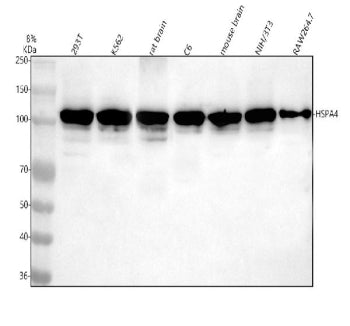
HSPA4 antibody detects Heat shock protein family A member 4, also known as HSP70-like protein 1, encoded by the HSPA4 gene on chromosome 5q31.1. HSPA4 is a molecular chaperone belonging to the heat shock protein 70 (HSP70) family, which assists in the folding, assembly, and degradation of nascent and stress-denatured proteins. It is expressed in most tissues, with particularly high levels in brain, liver, and testis, where protein quality control and stress recovery are essential. HSPA4 functions as a co-chaperone with HSP70 and HSP90 to maintain proteostasis under physiological and stress conditions.
Structurally, HSPA4 contains a conserved N-terminal ATPase domain and a C-terminal substrate-binding domain that interacts with unfolded polypeptides. It also includes a variable C-terminal tail that mediates interactions with co-chaperones and client proteins. HSPA4 belongs to the HSP110 subfamily of the HSP70 superfamily, which functions as a nucleotide exchange factor for other chaperones. Co-localization studies show HSPA4 in both the cytoplasm and nucleus, where it participates in heat shock response and protein degradation pathways.
Functionally, HSPA4 promotes proper protein folding, prevents aggregation, and assists in refolding stress-denatured proteins. It also participates in chaperone-mediated autophagy and the ubiquitin-proteasome pathway, ensuring the clearance of damaged proteins. In neurons, HSPA4 supports synaptic protein stability and protects against aggregation-linked neurodegenerative processes. In germ cells, it contributes to spermatogenesis by stabilizing testis-specific proteins. Known interaction partners include HSP70, HSP90, BAG family co-chaperones, and CHIP (STUB1), which regulate client degradation.
HSPA4 plays an important role in cellular defense against heat, oxidative stress, and proteotoxicity. It is upregulated in response to stress stimuli such as heat shock, ischemia, and toxin exposure. Dysregulation of HSPA4 expression has been associated with neurodegenerative diseases, infertility, and cancer. Overexpression enhances tumor survival by preventing apoptosis, while loss of function increases susceptibility to protein aggregation. Pathway associations include the heat shock response, protein refolding, and proteasomal degradation. During development, HSPA4 is expressed in proliferating and differentiating cells where protein folding demand is high.
The HSPA4 antibody from NSJ Bioreagents is a reliable reagent for research on molecular chaperones, protein quality control, and stress response mechanisms.
Share