NSJ Bioreagents
SKU:FY13215
GBA2 Antibody / Non-lysosomal glucosylceramidase, 100 ug
GBA2 Antibody / Non-lysosomal glucosylceramidase, 100 ug
Couldn't load pickup availability
GBA2 antibody detects Non-lysosomal glucosylceramidase, a cytoplasmic enzyme responsible for the hydrolysis of glucosylceramide to glucose and ceramide outside of lysosomes. The UniProt recommended name is Non-lysosomal glucosylceramidase (GBA2). This enzyme participates in sphingolipid metabolism and maintains the balance of glycosphingolipids that influence membrane structure, signaling, and lipid homeostasis.
Functionally, GBA2 antibody identifies a 927-amino-acid membrane-associated protein localized to the endoplasmic reticulum and Golgi apparatus. GBA2 catalyzes the removal of glucose from glucosylceramide, complementing the lysosomal enzyme GBA1 but functioning in non-lysosomal compartments. By regulating ceramide and glucosylceramide levels, GBA2 affects cell differentiation, apoptosis, and neuronal lipid metabolism.
The GBA2 gene is located on chromosome 9p13.3 and is highly expressed in brain, liver, testis, and kidney. Its activity is essential for maintaining sphingolipid turnover and membrane lipid composition, particularly in neuronal and reproductive tissues. GBA2 functions as a key metabolic enzyme in glycosphingolipid homeostasis and intracellular lipid transport.
Pathologically, mutations in GBA2 cause hereditary spastic paraplegia type 46 and autosomal recessive cerebellar ataxia, disorders characterized by impaired motor function and cerebellar degeneration. Loss of GBA2 activity leads to accumulation of glucosylceramide, resulting in disrupted lipid trafficking and neuronal dysfunction. Research using GBA2 antibody supports studies in lipid metabolism, neurobiology, and metabolic disease mechanisms.
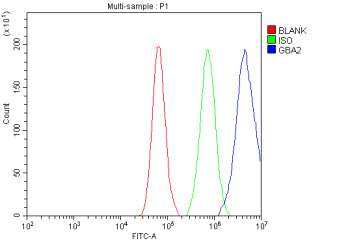
GBA2 antibody is validated for western blotting, immunohistochemistry, and immunofluorescence to detect glucosylceramidase enzymes. NSJ Bioreagents provides GBA2 antibody reagents optimized for studies in sphingolipid metabolism, cellular signaling, and neurological disorders.
Structurally, Non-lysosomal glucosylceramidase belongs to the glycoside hydrolase family 116 and contains a catalytic domain with a conserved nucleophilic residue required for glucosyl transfer. The enzyme is anchored to membranes through hydrophobic regions and operates in concert with lipid transporters. This antibody facilitates investigation of GBA2's role in non-lysosomal glycosphingolipid metabolism and neurological function.
Share