NSJ Bioreagents
SKU:FY13198
BGN Antibody / Biglycan, 100 ug
BGN Antibody / Biglycan, 100 ug
Couldn't load pickup availability
BGN antibody detects Biglycan, a small leucine-rich proteoglycan (SLRP) that regulates extracellular matrix assembly, collagen fibrillogenesis, and innate immune signaling. The UniProt recommended name is Biglycan (BGN). This extracellular matrix component binds collagens, growth factors, and cell surface receptors to coordinate tissue structure and repair responses.
Functionally, BGN antibody identifies a 368-amino-acid core protein decorated with chondroitin/dermatan sulfate glycosaminoglycan chains. Biglycan interacts with collagen types I, II, and VI to stabilize fibril formation and maintain matrix integrity. It also binds toll-like receptors TLR2 and TLR4, activating NF-kappaB-mediated inflammatory signaling in macrophages and fibroblasts. Through its dual structural and signaling roles, Biglycan serves as a molecular bridge between tissue mechanics and innate immune pathways.
The BGN gene is located on chromosome Xq28 and is expressed in connective tissues such as bone, tendon, skin, and vascular walls. It is particularly abundant in mineralized tissues, where it regulates osteoblast differentiation, bone mineralization, and matrix maturation. BGN expression is dynamically regulated during wound healing, inflammation, and fibrosis, contributing to tissue remodeling and repair.
Pathologically, altered BGN levels have been associated with muscular dystrophy, atherosclerosis, osteogenesis imperfecta, and cancer. Elevated Biglycan expression promotes fibrosis and chronic inflammation by sustaining macrophage activation, while deficiency leads to impaired matrix organization and skeletal fragility. Research using BGN antibody supports studies in extracellular matrix biology, inflammation, and connective tissue disease mechanisms.
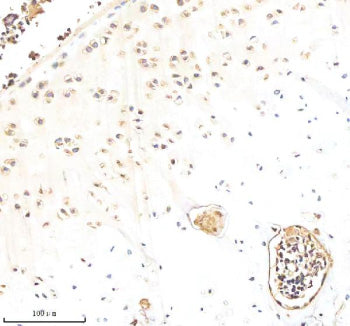
BGN antibody is validated for western blotting, immunohistochemistry, and ELISA to detect extracellular matrix proteoglycans. NSJ Bioreagents provides BGN antibody reagents optimized for studies in collagen assembly, matrix remodeling, and tissue regeneration.
Structurally, Biglycan contains tandem leucine-rich repeat (LRR) motifs that mediate protein-protein interactions and a signal peptide directing secretion to the extracellular matrix. The glycosaminoglycan attachment sites near its N-terminus allow Biglycan to form proteoglycan complexes essential for biomechanical strength and cell signaling. This antibody aids in the analysis of BGN's structural role in connective tissue maintenance and its signaling function in inflammation and repair.
Share