NSJ Bioreagents
SKU:FY13133
CAPN3 Antibody / Calpain 3, 100 ug
CAPN3 Antibody / Calpain 3, 100 ug
Couldn't load pickup availability
CAPN3 antibody detects Calpain 3, a skeletal muscle-specific calcium-dependent cysteine protease involved in muscle remodeling and sarcomere maintenance. The UniProt recommended name is Calpain 3 (CAPN3). This enzyme belongs to the calpain family of proteases that regulate cytoskeletal dynamics and muscle protein turnover.
Functionally, CAPN3 antibody identifies a 821-amino-acid protease characterized by catalytic cysteine and histidine residues forming the proteolytic triad. Calpain 3 associates with titin in the sarcomere and modulates proteolytic remodeling during muscle contraction and regeneration. Its activity is tightly regulated by calcium binding and autolytic activation mechanisms unique to muscle tissue.
The CAPN3 gene is located on chromosome 15q15.1 and is expressed predominantly in skeletal muscle. Calpain 3 acts as a muscle-specific regulator controlling sarcomeric integrity and signaling pathways that respond to mechanical stress and injury. It is rapidly activated upon calcium influx, enabling dynamic structural adaptation.
Pathologically, mutations in CAPN3 cause limb-girdle muscular dystrophy type 2A (LGMD2A), an autosomal recessive disorder characterized by progressive muscle weakness and atrophy. Deficiency of Calpain 3 disrupts sarcomere homeostasis and impairs muscle repair. Research using CAPN3 antibody supports studies in muscle physiology, proteolysis, and dystrophic disease mechanisms.
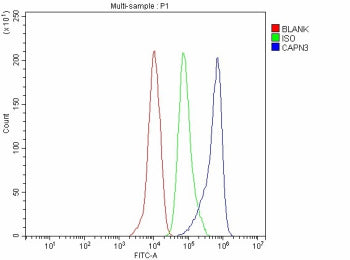
CAPN3 antibody is validated for western blotting, immunohistochemistry, and immunofluorescence to detect muscle-specific proteases. NSJ Bioreagents provides CAPN3 antibody reagents optimized for studies in muscle biology, calcium signaling, and protein turnover.
Structurally, Calpain 3 consists of protease core domains (PC1 and PC2) flanked by unique insertion sequences IS1 and IS2, which confer muscle-specific regulation. This antibody aids investigation of CAPN3's enzymatic role in sarcomere remodeling and muscular dystrophy.
Share