NSJ Bioreagents
SKU:FY12844
Phospho-AS160 (Thr642) Antibody / TBC1D4, 100 ul
Phospho-AS160 (Thr642) Antibody / TBC1D4, 100 ul
Couldn't load pickup availability
Phospho-AS160 (Thr642) antibody detects TBC1 domain family member 4 when phosphorylated at threonine 642. This protein is encoded by the TBC1D4 gene and is commonly referred to as AS160, Akt substrate of 160 kDa, and insulin-regulated Rab GTPase-activating protein. TBC1D4 functions as a Rab GAP that regulates trafficking of GLUT4 vesicles in response to insulin signaling. Phosphorylation at Thr642 by Akt relieves its inhibitory GAP activity, allowing Rab GTPases to promote translocation of GLUT4 to the plasma membrane, a critical event in glucose uptake by adipocytes and muscle cells.
Phospho-AS160 (Thr642) antibody is widely applied in metabolism, endocrinology, and diabetes research. Detecting phosphorylation at Thr642 provides a direct readout of insulin-stimulated Akt signaling and GLUT4 trafficking. This makes the antibody valuable for studies of insulin resistance, obesity, and type 2 diabetes. In addition, TBC1D4 is expressed in other tissues, linking it to energy homeostasis beyond classical insulin-responsive cells.
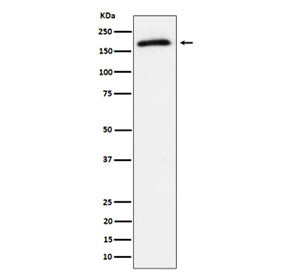
Applications for Phospho-AS160 (Thr642) antibody include western blotting, immunohistochemistry, immunofluorescence, and ELISA. Western blot assays detect phosphorylation changes in response to insulin or exercise, immunohistochemistry maps expression in metabolic tissues, and immunofluorescence highlights vesicle trafficking events. These methods allow researchers to connect molecular signaling to physiological glucose uptake.
Dysregulation of TBC1D4 phosphorylation is linked to insulin resistance and diabetes. Reduced phosphorylation impairs GLUT4 trafficking, while mutations in TBC1D4 cause severe postprandial hyperinsulinemia and muscle glycogen storage abnormalities. By applying Phospho-AS160 (Thr642) antibody, scientists can study both common and rare metabolic disorders.
Beyond metabolism, TBC1D4 regulates vesicle trafficking in immune cells, neurons, and other systems. Phosphorylation-dependent regulation highlights its integration with Akt signaling in multiple contexts. NSJ Bioreagents provides Phospho-AS160 (Thr642) antibody with validated specificity, ensuring accurate detection of this phosphorylation event in insulin and trafficking research.
Share