NSJ Bioreagents
SKU:FY12632
MVK Antibody / Mevalonate kinase, 100 ug
MVK Antibody / Mevalonate kinase, 100 ug
Couldn't load pickup availability
MVK antibody detects Mevalonate kinase, a key enzyme in the mevalonate pathway responsible for cholesterol and isoprenoid biosynthesis. MVK catalyzes the phosphorylation of mevalonic acid to 5-phosphomevalonate, a crucial step in the production of sterols and nonsterol isoprenoids. The MVK antibody is widely used in metabolic, genetic, and biochemical research to study cholesterol regulation, inflammation, and metabolic disorders.
MVK is encoded by the MVK gene located on human chromosome 12q24.11. The protein is approximately 396 amino acids long and localizes to the peroxisome and cytoplasm. MVK activity is regulated by feedback inhibition through cholesterol and isoprenoid intermediates, ensuring metabolic balance in lipid biosynthesis. The enzyme participates in the early steps of the mevalonate pathway, linking carbohydrate metabolism to lipid production.
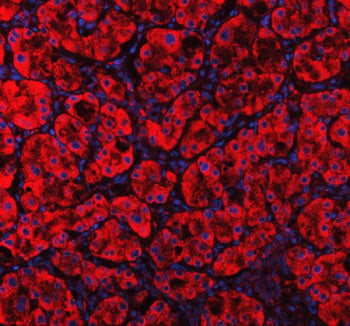
The MVK antibody detects a 43 kilodalton protein by western blot and reveals diffuse cytoplasmic and peroxisomal staining under immunofluorescence microscopy. MVK provides precursors for essential biomolecules such as coenzyme Q, dolichol, and prenylated proteins, which are required for membrane integrity, protein glycosylation, and signal transduction.
Mutations in MVK cause mevalonic aciduria and hyperimmunoglobulinemia D syndrome, characterized by recurrent fever and inflammation due to impaired isoprenoid synthesis and excessive accumulation of mevalonic acid. MVK deficiency disrupts protein prenylation, mitochondrial function, and immune regulation, leading to autoinflammatory symptoms. The enzyme's activity is thus essential for cellular metabolism, immune homeostasis, and energy balance.
Because of its central role in cholesterol metabolism and inflammation, MVK is a crucial target for understanding metabolic regulation and disease pathogenesis. NSJ Bioreagents provides a validated MVK antibody optimized for its applications, supporting research into lipid metabolism, genetic disorders, and therapeutic development.
Share