NSJ Bioreagents
SKU:FY12591
TCIRG1 Antibody / T-cell immune regulator 1, 100 ug
TCIRG1 Antibody / T-cell immune regulator 1, 100 ug
Couldn't load pickup availability
TCIRG1 antibody detects T-cell immune regulator 1, a subunit of the vacuolar-type H+-ATPase (V-ATPase) proton pump that acidifies intracellular compartments and bone resorption lacunae. TCIRG1 is essential for osteoclast function, lysosomal acidification, and immune regulation. The TCIRG1 antibody is widely used in osteoclast biology, immunology, and cell physiology research to study proton transport, lysosomal function, and bone metabolism.
TCIRG1 is encoded by the TCIRG1 gene on human chromosome 11q13.2. The protein is approximately 830 amino acids long and represents the a3 isoform of the V-ATPase a subunit. It localizes to the ruffled border membrane of osteoclasts, where it pumps protons into the bone resorption lacuna, dissolving mineralized matrix and enabling bone remodeling. In other cell types, TCIRG1 contributes to lysosomal acidification and vesicle trafficking.
The TCIRG1 antibody detects a 100 kilodalton band by western blot and shows membrane and vesicular staining under immunofluorescence microscopy. Mutations in TCIRG1 cause autosomal recessive osteopetrosis, a disorder characterized by defective bone resorption, increased bone density, and bone marrow failure. In immune cells, TCIRG1 expression regulates antigen processing and presentation by acidifying endolysosomal compartments.
Beyond bone biology, TCIRG1 plays roles in metabolic adaptation and intracellular pH regulation. It interacts with other V-ATPase subunits to control organelle acidification in neurons, hepatocytes, and epithelial cells. Dysregulation of TCIRG1 or V-ATPase activity contributes to cancer cell invasion and multidrug resistance due to altered extracellular acidification.
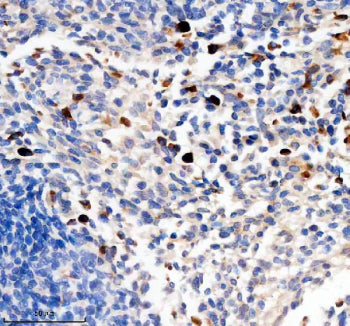
As a vital component of the proton pump machinery, TCIRG1 links acid-base regulation with immune and skeletal homeostasis. NSJ Bioreagents provides a validated TCIRG1 antibody optimized for western blot, immunohistochemistry, and bone tissue studies, supporting detailed research into osteoclast function, lysosomal biology, and metabolic regulation.
Share