NSJ Bioreagents
SKU:FY12547
SIN3B Antibody / Paired amphipathic helix protein Sin3b, 100 ug
SIN3B Antibody / Paired amphipathic helix protein Sin3b, 100 ug
Couldn't load pickup availability
SIN3B antibody detects Paired amphipathic helix protein Sin3b, a transcriptional corepressor that regulates chromatin structure and gene expression by recruiting histone deacetylase (HDAC) complexes. SIN3B functions in concert with its paralog SIN3A to coordinate gene silencing, differentiation, and cell cycle control. The SIN3B antibody is widely used in epigenetics and transcriptional regulation research to examine HDAC-dependent gene repression.
SIN3B is encoded by the SIN3B gene on human chromosome 19p13.11. The protein is approximately 150 kilodaltons and contains multiple paired amphipathic helix (PAH) domains that mediate interactions with transcription factors and chromatin-modifying enzymes. SIN3B serves as a scaffold that assembles HDAC1, HDAC2, RBBP4/7, and other corepressors into multiprotein complexes targeting specific promoters.
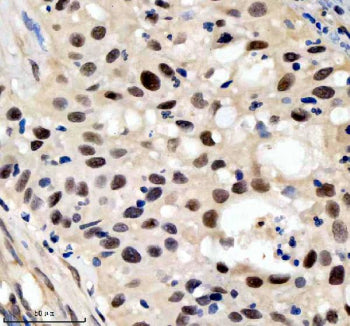
The SIN3B antibody detects a 150 kilodalton band by western blot and shows nuclear localization by immunofluorescence. Through recruitment of HDAC complexes, SIN3B deacetylates histones H3 and H4, resulting in chromatin compaction and transcriptional repression. It also interacts with transcription factors such as E2F4, MAD, and REST, enabling context-dependent regulation of genes involved in proliferation, senescence, and neuronal development.
SIN3B plays key roles in differentiation, acting as a switch from proliferation to quiescence. Knockdown of SIN3B leads to uncontrolled growth and defective chromatin silencing, while overexpression suppresses oncogenic transcription programs. Altered SIN3B function has been implicated in cancer, diabetes, and neurodevelopmental disorders due to disrupted epigenetic control.
As a master regulator of chromatin remodeling, SIN3B integrates multiple signaling pathways to maintain transcriptional balance. NSJ Bioreagents provides a validated SIN3B antibody optimized for western blot, chromatin immunohistochemistry, and nuclear complex analysis, supporting research into epigenetic repression, differentiation, and tumor suppression.
Share