NSJ Bioreagents
SKU:FY12502
ANXA7 Antibody / Annexin A7, 100 ul
ANXA7 Antibody / Annexin A7, 100 ul
Couldn't load pickup availability
ANXA7 antibody detects annexin A7, a calcium and phospholipid binding protein encoded by the ANXA7 gene. Annexin A7 belongs to the annexin family of proteins characterized by conserved annexin repeats that mediate calcium dependent membrane interactions. ANXA7 functions in membrane fusion, exocytosis, and calcium signaling, making it an important regulator of vesicular transport and cellular communication.
ANXA7 antibody is widely applied in neuroscience, cardiovascular biology, and oncology. In neurons, annexin A7 regulates synaptic vesicle exocytosis and neurotransmitter release. In cardiac tissue, it contributes to calcium handling and contractility. Altered expression of ANXA7 has been observed in several cancers, where it influences tumor growth, invasion, and therapy resistance. By detecting annexin A7, researchers can study its diverse roles across tissues and disease contexts.
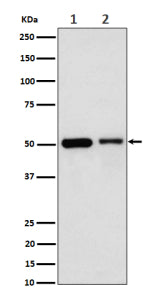
In western blot assays, ANXA7 antibody detects protein bands of expected molecular weight across tissue lysates. Immunohistochemistry highlights localization in brain, heart, and epithelial tissues. Immunofluorescence provides high resolution mapping of annexin A7 distribution at cellular membranes and vesicular compartments.
Annexin A7 participates in calcium dependent signaling cascades and contributes to regulation of phospholipase activity. It plays a role in membrane repair, cell proliferation, and apoptosis. Dysregulation of ANXA7 expression has been implicated in tumorigenesis, cardiovascular dysfunction, and neurological disease. By using ANXA7 antibody, scientists can explore how annexin mediated signaling influences both health and pathology.
ANXA7 antibody from NSJ Bioreagents provides dependable specificity for studying annexin biology, vesicle trafficking, and calcium signaling. Its proven performance across applications supports accurate detection of annexin A7 in both experimental and clinical research contexts.
Share