NSJ Bioreagents
SKU:FY12437
TTLL1 Antibody / Tubulin-tyrosine ligase-like protein 1, 100 ug
TTLL1 Antibody / Tubulin-tyrosine ligase-like protein 1, 100 ug
Couldn't load pickup availability
The TTLL1 antibody targets Tubulin-tyrosine ligase-like protein 1, an enzyme encoded by the TTLL1 gene that catalyzes the polyglutamylation of tubulin. Tubulin-tyrosine ligase-like protein 1 modifies the C-terminal tails of alpha-tubulin, generating polyglutamate side chains that regulate microtubule stability, interactions with motor proteins, and axonal transport. The TTLL1 antibody enables researchers to study post-translational modification of microtubules and the functional specialization of the cytoskeleton in neuronal and ciliary systems.
Tubulin-tyrosine ligase-like protein 1 belongs to the tubulin tyrosine ligase-like family, a group of enzymes that mediate tubulin polyglutamylation and polyglycylation. It primarily acts on alpha-tubulin within stable microtubule arrays such as those found in neurons and cilia. The TTLL1 antibody supports visualization of enzyme expression in neuronal soma and axons, reflecting its enrichment in brain tissue and importance for neural function. Loss of TTLL1 leads to reduced tubulin polyglutamylation, defective neuronal transport, and abnormal ciliary movement.
Polyglutamylation modulates the binding of microtubule-associated proteins (MAPs) and molecular motors including kinesin and dynein. The TTLL1 antibody provides a valuable reagent for analyzing this regulatory layer of cytoskeletal control. Dysregulation of TTLL1 activity contributes to neurodegenerative and ciliopathy phenotypes due to altered microtubule organization. TTLL1-dependent modification also influences mitotic spindle assembly and chromosome segregation.
Tubulin-tyrosine ligase-like protein 1 localizes to the cytoplasm and is often concentrated at centrosomes and ciliary bases. The TTLL1 antibody supports localization studies revealing its participation in microtubule-anchoring regions. Mutations in TTLL1 have been associated with human developmental disorders involving cerebellar atrophy and cognitive delay, reinforcing its essential role in neuronal microtubule regulation.
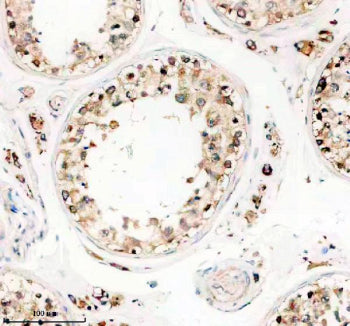
The TTLL1 antibody performs effectively in western blotting, immunofluorescence, and immunohistochemistry, yielding distinct cytoplasmic and centrosomal staining. NSJ Bioreagents provides this antibody as a validated, high-specificity reagent for cytoskeleton, neurobiology, and cilia research. By enabling precise detection of Tubulin-tyrosine ligase-like protein 1, the TTLL1 antibody supports studies of microtubule modification, axonal transport, and cellular architecture maintenance.
Share