NSJ Bioreagents
SKU:FY12233
TRIOBP Antibody / Trio and F-actin-binding protein, 100 ug
TRIOBP Antibody / Trio and F-actin-binding protein, 100 ug
Couldn't load pickup availability
TRIOBP antibody detects Trio and F-actin-binding protein, encoded by the TRIOBP gene on chromosome 22q13.1. TRIOBP antibody is widely used in studies of cytoskeletal dynamics, hearing, and neurodevelopment. TRIOBP is an actin-binding protein involved in organizing filamentous actin into stable bundles, regulating cell shape, adhesion, and structural integrity. Isoforms of TRIOBP have tissue-specific functions, particularly in the inner ear where they are essential for stereocilia architecture in sensory hair cells.
Structurally, TRIOBP is a large protein of ~236 kDa in its longest isoform, but smaller isoforms such as TRIOBP-1 and TRIOBP-4 exist due to alternative splicing. It contains coiled-coil regions and actin-binding motifs, which facilitate F-actin crosslinking. The presence of multiple isoforms allows functional diversity, with long forms stabilizing actin filaments and shorter ones regulating cytoskeletal assembly dynamics.
Functionally, TRIOBP stabilizes actin bundles in stereocilia of cochlear hair cells, supporting mechanotransduction required for hearing. Knockdown or mutation of TRIOBP results in stereocilia disorganization and deafness. In neurons, TRIOBP contributes to dendritic spine morphology and synaptic plasticity. It is also implicated in stress fiber formation and cancer cell invasion. Researchers use TRIOBP antibody to study actin regulation, auditory biology, and neuronal development.
Clinically, TRIOBP mutations cause autosomal recessive nonsyndromic deafness (DFNB28), reflecting its essential role in stereocilia maintenance. Variants are also associated with psychiatric disorders including schizophrenia, likely due to its influence on synaptic architecture. Dysregulated TRIOBP expression has been observed in cancers, particularly glioblastoma, where it promotes invasion and survival. NSJ Bioreagents provides TRIOBP antibody for cytoskeletal biology, auditory research, and cancer studies.
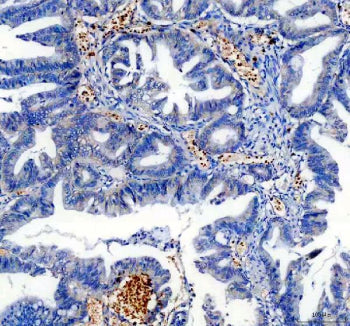
Experimentally, TRIOBP antibody is used in western blotting to detect isoforms of varying sizes, in immunofluorescence to visualize actin bundle association, and in immunohistochemistry to analyze cochlear and neural tissue. Co-immunoprecipitation with TRIOBP antibody identifies actin and cytoskeletal regulators as interaction partners.
Share