NSJ Bioreagents
SKU:FY12201
Histone H3 (acetyl K9) Antibody / HIST1H3A, 100 ul
Histone H3 (acetyl K9) Antibody / HIST1H3A, 100 ul
Couldn't load pickup availability
Histone H3 (acetyl K9) antibody detects histone H3 acetylated at lysine 9, an important chromatin modification regulating transcription and gene expression. Histone H3, encoded in part by HIST1H3A, is a core nucleosomal protein around which DNA is wrapped. Acetylation at lysine 9, mediated by histone acetyltransferases (HATs) such as GCN5 and PCAF, neutralizes positive charges on histone tails, loosening chromatin structure and promoting transcriptional activation.
Research using Histone H3 (acetyl K9) antibody has shown this modification's pivotal role in epigenetics. H3K9ac marks promoters and enhancers of actively transcribed genes, serving as a hallmark of euchromatin. Its presence correlates strongly with transcription factor binding and RNA polymerase II recruitment. Genome-wide mapping studies reveal H3K9ac as a key indicator of cell identity and differentiation status.
Dysregulation of H3K9 acetylation is associated with cancer, neurological disease, and inflammatory conditions. Hypoacetylation of H3K9 is common in cancers, where tumor suppressor genes are transcriptionally silenced. Conversely, aberrant hyperacetylation can activate oncogenes. In neurodegenerative diseases such as Alzheimer's and Huntington's disease, altered H3K9 acetylation disrupts neuronal gene expression, contributing to cognitive decline. Inflammatory signaling pathways also remodel H3K9ac patterns, influencing cytokine production.
H3K9 acetylation is a therapeutic target for epigenetic drugs. Histone deacetylase inhibitors (HDACi) restore acetylation at silenced promoters, reactivating tumor suppressor expression. Monitoring H3K9ac with antibodies provides a direct readout of HDACi activity, making it an essential biomarker in clinical research.
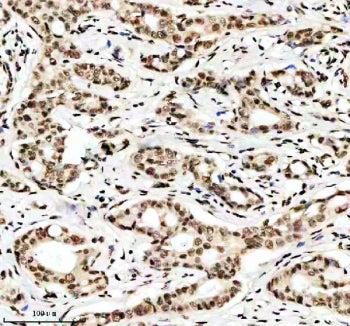
Antibodies against acetyl-H3K9 are validated for chromatin immunoprecipitation (ChIP), western blot, immunofluorescence, and immunohistochemistry. These reagents allow researchers to profile chromatin landscapes, study transcriptional regulation, and monitor responses to epigenetic therapies. Clone-based antibodies ensure consistent recognition of acetylated lysine 9 while avoiding cross-reactivity with unmodified or other modified histone H3 residues.
NSJ Bioreagents supplies this Histone H3 (acetyl K9) antibody for research in epigenetics, transcriptional control, and disease pathology.
Share