NSJ Bioreagents
SKU:FY12137
RANBP9 Antibody / Ran-binding protein 9, 100 ug
RANBP9 Antibody / Ran-binding protein 9, 100 ug
Couldn't load pickup availability
RANBP9 antibody detects Ran-binding protein 9, encoded by the RANBP9 gene on chromosome 6p23. RANBP9 antibody is used to study this multifunctional scaffold protein, which interacts with a wide range of partners and integrates signaling pathways across the nucleus, cytoplasm, and cell surface. RANBP9 belongs to a family of Ran-binding proteins that regulate nucleocytoplasmic transport and signaling. However, RANBP9 is distinguished by its adaptor role, coordinating interactions in growth factor signaling, cytoskeletal dynamics, and transcriptional regulation.
Structurally, RANBP9 contains several conserved domains, including a SPRY domain, LisH motif, CTLH domain, and a Ran-binding domain. These elements allow interactions with diverse proteins such as receptor tyrosine kinases, scaffolding proteins, and chromatin regulators. The presence of a LisH domain implicates RANBP9 in microtubule regulation and dimerization. The CTLH domain links RANBP9 to ubiquitin ligase complexes, suggesting a role in protein turnover. Its domain organization defines it as a versatile scaffold capable of assembling multiprotein complexes.
Functionally, RANBP9 contributes to diverse cellular processes. It enhances signaling by interacting with receptors such as c-Met and integrins, thereby influencing cell adhesion, migration, and proliferation. In the nucleus, RANBP9 regulates transcription through associations with chromatin-modifying complexes. Its adaptor role in cytoskeletal organization enables actin remodeling, critical for cell shape and motility. Loss-of-function studies demonstrate that depletion of RANBP9 impairs cell adhesion, migration, and stress responses. Researchers employ RANBP9 antibody to dissect these pathways in both normal physiology and disease states.
Clinically, altered RANBP9 expression is implicated in cancer, neurodegeneration, and viral infection. Overexpression of RANBP9 has been observed in lung, breast, and gastric cancers, where it promotes tumor progression by amplifying receptor signaling. Conversely, loss of RANBP9 can impair tumor suppression by destabilizing growth factor receptors. In neurobiology, RANBP9 overexpression contributes to amyloid precursor protein processing and amyloid-beta accumulation, linking it to Alzheimer's disease. In infectious disease, RANBP9 interacts with viral proteins, influencing replication and immune evasion. These diverse associations underscore its role as a molecular hub.
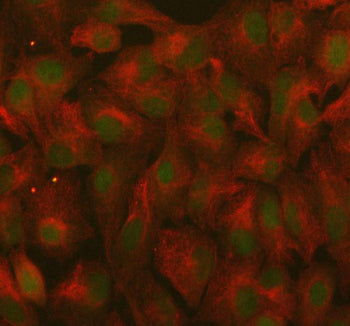
Experimentally, RANBP9 antibody is applied in western blotting to detect the ~90 kDa protein, in immunohistochemistry to analyze tumor expression patterns, and in immunofluorescence to study cytoskeletal localization. Immunoprecipitation with RANBP9 antibody reveals interactions with receptor complexes, chromatin regulators, and ubiquitin ligase components. NSJ Bioreagents supplies RANBP9 antibody as a reliable reagent for cancer biology, neurodegeneration studies, and signaling research.
Share