NSJ Bioreagents
SKU:FY12110
SAMD9L Antibody / Sterile alpha motif domain-containing protein 9-like, 100 ug
SAMD9L Antibody / Sterile alpha motif domain-containing protein 9-like, 100 ug
Couldn't load pickup availability
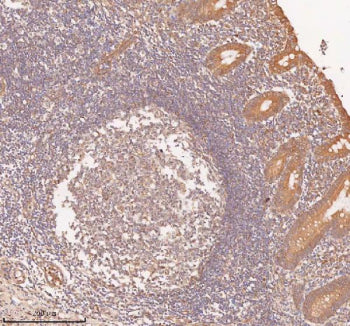
SAMD9L antibody recognizes Sterile alpha motif domain-containing protein 9-like, encoded by the SAMD9L gene on chromosome 7q21.2. This protein belongs to a family of interferon-inducible proteins involved in innate immunity, cell proliferation regulation, and antiviral defense. SAMD9L contains a sterile alpha motif (SAM) domain that facilitates protein-protein interactions important for cellular signaling and homeostasis. Functional studies have demonstrated that SAMD9L suppresses cell growth and exerts antiviral activity by restricting viral replication within host cells. Pathogenic mutations in SAMD9L have been associated with myelodysplastic syndromes, ataxia-pancytopenia syndrome, and bone marrow failure. Germline mutations can predispose individuals to hematologic malignancies by impairing normal hematopoiesis. Somatic alterations and copy number changes in SAMD9L are also detected in myeloid neoplasms, suggesting a tumor suppressor function. The protein has also been studied in relation to interferon signaling, with increased expression observed following viral infection or inflammatory stimuli. The study of SAMD9L is important for understanding both immune defense and cancer biology. In cellular models, overexpression of SAMD9L inhibits cell proliferation, while knockdown promotes unchecked cell growth, reinforcing its tumor suppressive role. Additionally, SAMD9L mutations contribute to syndromes marked by cerebellar ataxia, pancytopenia, and predisposition to leukemia. This dual role in host defense and growth suppression underscores its biomedical importance. Tools such as SAMD9L antibody are essential for mapping protein expression in bone marrow, peripheral blood, and disease models, and for validating mechanistic insights into immune response pathways. SAMD9L antibodies have been used in western blot and immunohistochemical assays to detect expression changes in patient samples and experimental systems. The ability to track expression changes during interferon treatment or viral infection provides a window into its dynamic role in host-pathogen interactions. Given its links to immune defense and hematological disease, SAMD9L remains an active area of translational research, with implications for both diagnostic and therapeutic strategies.
Share