NSJ Bioreagents
SKU:FY12643
CXCR6 Antibody / C-X-C chemokine receptor type 6 / CD186
CXCR6 Antibody / C-X-C chemokine receptor type 6 / CD186
Couldn't load pickup availability
CXCR6 antibody detects C-X-C chemokine receptor type 6, a G protein coupled receptor encoded by the CXCR6 gene. CXCR6 binds the chemokine ligand CXCL16, mediating chemotaxis and adhesion of T cells, natural killer T cells, and other immune populations. It is highly expressed in liver, lung, and inflamed tissues, where it regulates immune surveillance, inflammation, and host-pathogen interactions.<br><br>CXCR6 antibody is widely applied in immunology, oncology, and infectious disease research. In immunity, CXCR6 guides tissue resident memory T cells and NKT cells to inflamed sites, supporting pathogen defense and tissue homeostasis. In cancer, CXCR6 expression is associated with tumor infiltrating lymphocytes and modulation of the tumor microenvironment. By detecting CXCR6, researchers can study how chemokine receptors regulate immunity and disease progression.<br><br> Flow cytometry distinguishes CXCR6 positive lymphocyte subsets in blood and tissues. Immunohistochemistry maps expression in liver, lung, and tumors, while immunofluorescence highlights surface localization on immune cells. These applications provide versatile tools for studying chemokine receptor biology.<br><br>CXCR6 also plays roles in viral infection and chronic inflammation. It serves as a co-receptor for HIV entry into cells and contributes to pathogenesis of liver disease. By applying CXCR6 antibody, scientists can investigate receptor function in immune surveillance, infection, and cancer immunity.<br><br>CXCR6 antibody from NSJ Bioreagents provides strong specificity for detecting this chemokine receptor across research platforms. Its proven reliability ensures accurate detection in immunology and translational studies.
Specifications
| Family | Primary antibody |
|---|---|
| Formulation | Rabbit IgG in phosphate buffered saline, pH 7.4, 150mM NaCl, 0.02% sodium azide and 50% glycerol, 0.4-0.5mg/ml BSA |
| Format | Liquid |
| Clone | 31C52 |
| Host Animal | Rabbit |
| Clonality | Recombinant Rabbit Monoclonal |
| Isotype | Rabbit IgG |
| Species Reactivity | Human |
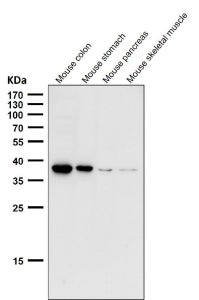
| Application | WB |
| Application Details | Western blot: 1:500-1:2000 |
| Application Note | Optimal dilution of the CXCR6 antibody should be determined by the researcher. |
| Immunogen | A synthesized peptide derived from human CXCR6 / CD186 was used as the immunogen for the CXCR6 antibody. |
| Buffer | Rabbit IgG in phosphate buffered saline, pH 7.4, 150mM NaCl, 0.02% sodium azide and 50% glycerol, 0.4-0.5mg/ml BSA. |
| Purity | Affinity-chromatography |
| Storage | Store the CXCR6 antibody at -20oC. |
| Limitation | This CXCR6 antibody is available for research use only. |
| Uniprot # | O00574 |
| Status | Available |
| PDF Link | http://www.nsjbio.com/tds-pdf/cxcr6-antibody-c-x-c-chemokine-receptor-type-6-fy12643-nsj-bioreagents |
| Title | CXCR6 Antibody / C-X-C chemokine receptor type 6 / CD186 |
| Description | CXCR6 antibody detects C-X-C chemokine receptor type 6, a G protein coupled receptor encoded by the CXCR6 gene. CXCR6 binds the chemokine ligand CXCL16, mediating chemotaxis and adhesion of T cells, natural killer T cells, and other immune populations. It is highly expressed in liver, lung, and inflamed tissues, where it regulates immune surveillance, inflammation, and host-pathogen interactions.<br><br>CXCR6 antibody is widely applied in immunology, oncology, and infectious disease research. In immunity, CXCR6 guides tissue resident memory T cells and NKT cells to inflamed sites, supporting pathogen defense and tissue homeostasis. In cancer, CXCR6 expression is associated with tumor infiltrating lymphocytes and modulation of the tumor microenvironment. By detecting CXCR6, researchers can study how chemokine receptors regulate immunity and disease progression.<br><br> Flow cytometry distinguishes CXCR6 positive lymphocyte subsets in blood and tissues. Immunohistochemistry maps expression in liver, lung, and tumors, while immunofluorescence highlights surface localization on immune cells. These applications provide versatile tools for studying chemokine receptor biology.<br><br>CXCR6 also plays roles in viral infection and chronic inflammation. It serves as a co-receptor for HIV entry into cells and contributes to pathogenesis of liver disease. By applying CXCR6 antibody, scientists can investigate receptor function in immune surveillance, infection, and cancer immunity.<br><br>CXCR6 antibody from NSJ Bioreagents provides strong specificity for detecting this chemokine receptor across research platforms. Its proven reliability ensures accurate detection in immunology and translational studies. |
Share