1
/
of
1
NSJ Bioreagents
SKU:R30625
CD89 Antibody
CD89 Antibody
Regular price
$449.00 USD
Regular price
Sale price
$449.00 USD
Unit price
/
per
Shipping calculated at checkout.
Couldn't load pickup availability
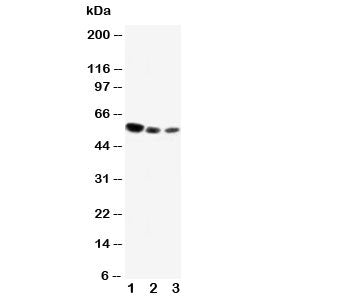
FCAR, Receptor for Fc fragment of IGA, is also known as CD89. It is a glycoprotein of 50-100 kD present on a number of cell types, including neutrophils, monocytes, macrophages, and eosinophils. CD89 interacts with aggregated IgAs (but not IgGs), such as IgA coated on the surface of an invading microorganism, and mediates several immunologic defense processes such as phagocytosis, antibody-dependent cell-mediated cytotoxicity, and stimulation of the release of inflammatory mediators.
Specifications
| Family | Primary antibody |
|---|---|
| Formulation | 0.5mg/ml if reconstituted with 0.2ml sterile DI water |
| Format | Antigen affinity purified |
| Host Animal | Rabbit |
| Clonality | Polyclonal (rabbit origin) |
| Isotype | Rabbit IgG |
| Species Reactivity | Human |
| Application | WB |
| Application Details | Western blot: 0.5-1ug/ml |
| Application Note | The stated application concentrations are suggested starting amounts. Titration of the CD89 antibody may be required due to differences in protocols and secondary/substrate sensitivity. |
| Immunogen | An amino acid sequence from the middle of human CD89 (EFVIDHMDANKAGRYQCQ) was used as the immunogen for this CD89 antibody. |
| Buffer | Lyophilized from 1X PBS with 2.5% BSA and 0.025% sodium azide/thimerosal |
| Purity | Antigen affinity |
| Storage | After reconstitution, the CD89 antibody can be stored for up to one month at 4oC. For long-term, aliquot and store at -20oC. Avoid repeated freezing and thawing. |
| Limitation | This CD89 antibody is available for research use only. |
| Uniprot # | P24071 |
| Status | Available |
| PDF Link | https://www.nsjbio.com/tds-pdf/cd89-antibody-r30625 |
| Title | CD89 Antibody |
| Description | FCAR, Receptor for Fc fragment of IGA, is also known as CD89. It is a glycoprotein of 50-100 kD present on a number of cell types, including neutrophils, monocytes, macrophages, and eosinophils. CD89 interacts with aggregated IgAs (but not IgGs), such as IgA coated on the surface of an invading microorganism, and mediates several immunologic defense processes such as phagocytosis, antibody-dependent cell-mediated cytotoxicity, and stimulation of the release of inflammatory mediators. |
Share