NSJ Bioreagents
SKU:F52013-0.08ML
CD1e Antibody
CD1e Antibody
Couldn't load pickup availability
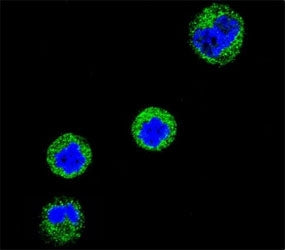
CD1E encodes a member of the CD1 family of transmembrane glycoproteins, which are structurally related to the major histocompatibility complex (MHC) proteins and form heterodimers with beta-2-microglobulin. The CD1 proteins mediate the presentation of primarily lipid and glycolipid antigens of self or microbial origin to T cells. The human genome contains five CD1 family genes organized in a cluster on chromosome 1. The CD1 family members are thought to differ in their cellular localization and specificity for particular lipid ligands. The protein encoded by this gene localizes within Golgi compartments, endosomes, and lysosomes, and is cleaved into a stable soluble form. The soluble form is required for the intracellular processing of some glycolipids into a form that can be presented by other CD1 family members.
Specifications
| Family | Primary antibody |
|---|---|
| Formulation | In 1X PBS, pH 7.4, with 0.09% sodium azide |
| Format | Antigen affinity purified |
| Host Animal | Rabbit |
| Clonality | Polyclonal (rabbit origin) |
| Isotype | Rabbit Ig |
| Species Reactivity | Human |
| Application | WB, IHC, FACS, IF, ELISA |
| Application Details | Western blot: 1:1000,IHC (Paraffin): 1:50-1:100,Flow Cytometry: 1:10-1:50,Immunofluorescence: 1:10-1:50 |
| Application Note | Titration of the CD1e antibody may be required due to differences in protocols and secondary/substrate sensitivity. |
| Immunogen | A portion of amino acids 184-212 from the human protein was used as the immunogen for this CD1e antibody. |
| Purity | Antigen affinity |
| Storage | Aliquot the CD1e antibody and store frozen at -20oC or colder. Avoid repeated freeze-thaw cycles. |
| Limitation | This CD1e antibody is available for research use only. |
| Uniprot # | P15812 |
| Status | Available |
| PDF Link | https://www.nsjbio.com/tds-pdf/cd1e-antibody-f52013 |
| Title | CD1e Antibody |
| Description | CD1E encodes a member of the CD1 family of transmembrane glycoproteins, which are structurally related to the major histocompatibility complex (MHC) proteins and form heterodimers with beta-2-microglobulin. The CD1 proteins mediate the presentation of primarily lipid and glycolipid antigens of self or microbial origin to T cells. The human genome contains five CD1 family genes organized in a cluster on chromosome 1. The CD1 family members are thought to differ in their cellular localization and specificity for particular lipid ligands. The protein encoded by this gene localizes within Golgi compartments, endosomes, and lysosomes, and is cleaved into a stable soluble form. The soluble form is required for the intracellular processing of some glycolipids into a form that can be presented by other CD1 family members. |
Share