NSJ Bioreagents
SKU:FY12753
CASP6 Antibody / Caspase 6
CASP6 Antibody / Caspase 6
Couldn't load pickup availability
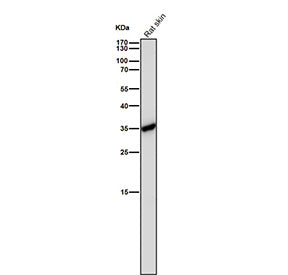
CASP6 antibody detects caspase 6, a cysteine protease encoded by the CASP6 gene. Alternate identifiers include MCH2 and apoptotic cysteine protease 6. Caspase 6 belongs to the caspase family of cysteine aspartate proteases that orchestrate apoptosis and inflammation. Synthesized as an inactive proenzyme, caspase 6 undergoes autocatalytic processing or cleavage by upstream caspases to generate the active enzyme, which then cleaves specific substrates during programmed cell death.<br><br>CASP6 antibody is widely applied in neuroscience, apoptosis research, and oncology. Caspase 6 activity contributes to neuronal apoptosis and axonal degeneration, with elevated activity linked to Alzheimer disease and Huntington disease. In cancer biology, caspase 6 mediates apoptosis in response to stress and chemotherapeutic drugs. By detecting caspase 6, researchers can examine apoptotic pathways and their dysregulation in disease.<br><br> Western blot assays identify pro and cleaved caspase 6 isoforms, immunohistochemistry maps expression in tissues undergoing apoptosis, and immunofluorescence detects localization in neuronal and cancer cell models. These assays provide robust methods for analyzing apoptotic signaling pathways.<br><br>Caspase 6 cleaves substrates such as lamin A and huntingtin, contributing to nuclear disassembly and neurodegeneration. Dysregulated activity promotes pathological cell death, while insufficient activity may contribute to impaired apoptosis in cancer. By applying CASP6 antibody, scientists can evaluate the balance of pro survival and pro death signals across systems.<br><br>CASP6 antibody from NSJ Bioreagents delivers reliable specificity for detecting caspase 6. Its performance across multiple applications supports both basic apoptosis research and translational studies in oncology and neurodegeneration.
Specifications
| Family | Primary antibody |
|---|---|
| Formulation | Rabbit IgG in phosphate buffered saline, pH 7.4, 150mM NaCl, 0.02% sodium azide and 50% glycerol, 0.4-0.5mg/ml BSA |
| Format | Liquid |
| Clone | 31C93 |
| Host Animal | Rabbit |
| Clonality | Recombinant Rabbit Monoclonal |
| Isotype | Rabbit IgG |
| Species Reactivity | Human, Mouse, Rat |
| Application | WB, IHC |
| Application Details | Western blot: 1:500-1:2000,Immunohistochemistry: 1:50-1:200 |
| Application Note | Optimal dilution of the CASP6 antibody should be determined by the researcher. |
| Immunogen | A synthesized peptide derived from human Caspase-6 was used as the immunogen for the CASP6 antibody. |
| Buffer | Rabbit IgG in phosphate buffered saline, pH 7.4, 150mM NaCl, 0.02% sodium azide and 50% glycerol, 0.4-0.5mg/ml BSA. |
| Purity | Affinity-chromatography |
| Storage | Store the CASP6 antibody at -20oC. |
| Limitation | This CASP6 antibody is available for research use only. |
| Uniprot # | P55212 |
| Status | Available |
| PDF Link | http://www.nsjbio.com/tds-pdf/casp6-antibody-caspase-6-fy12753-nsj-bioreagents |
| Title | CASP6 Antibody / Caspase 6 |
| Description | CASP6 antibody detects caspase 6, a cysteine protease encoded by the CASP6 gene. Alternate identifiers include MCH2 and apoptotic cysteine protease 6. Caspase 6 belongs to the caspase family of cysteine aspartate proteases that orchestrate apoptosis and inflammation. Synthesized as an inactive proenzyme, caspase 6 undergoes autocatalytic processing or cleavage by upstream caspases to generate the active enzyme, which then cleaves specific substrates during programmed cell death.<br><br>CASP6 antibody is widely applied in neuroscience, apoptosis research, and oncology. Caspase 6 activity contributes to neuronal apoptosis and axonal degeneration, with elevated activity linked to Alzheimer disease and Huntington disease. In cancer biology, caspase 6 mediates apoptosis in response to stress and chemotherapeutic drugs. By detecting caspase 6, researchers can examine apoptotic pathways and their dysregulation in disease.<br><br> Western blot assays identify pro and cleaved caspase 6 isoforms, immunohistochemistry maps expression in tissues undergoing apoptosis, and immunofluorescence detects localization in neuronal and cancer cell models. These assays provide robust methods for analyzing apoptotic signaling pathways.<br><br>Caspase 6 cleaves substrates such as lamin A and huntingtin, contributing to nuclear disassembly and neurodegeneration. Dysregulated activity promotes pathological cell death, while insufficient activity may contribute to impaired apoptosis in cancer. By applying CASP6 antibody, scientists can evaluate the balance of pro survival and pro death signals across systems.<br><br>CASP6 antibody from NSJ Bioreagents delivers reliable specificity for detecting caspase 6. Its performance across multiple applications supports both basic apoptosis research and translational studies in oncology and neurodegeneration. |
Share