1
/
of
1
NSJ Bioreagents
SKU:RQ6830
Camp Antibody
Camp Antibody
Regular price
$449.00 USD
Regular price
Sale price
$449.00 USD
Unit price
/
per
Shipping calculated at checkout.
Couldn't load pickup availability
This gene encodes a member of an antimicrobial peptide family, characterized by a highly conserved N-terminal signal peptide containing a cathelin domain and a structurally variable cationic antimicrobial peptide, which is produced by extracellular proteolysis from the C-terminus. The protein plays an important role in innate immunity defense against viruses. In addition to its antibacterial, antifungal, and antiviral activities, the encoded protein functions in cell chemotaxis, immune mediator induction, and inflammatory response regulation.
Specifications
| Family | Primary antibody |
|---|---|
| Formulation | 0.5mg/ml if reconstituted with 0.2ml sterile DI water |
| Format | Antigen affinity purified |
| Host Animal | Rabbit |
| Clonality | Polyclonal (rabbit origin) |
| Isotype | Rabbit IgG |
| Species Reactivity | Mouse, Rat |
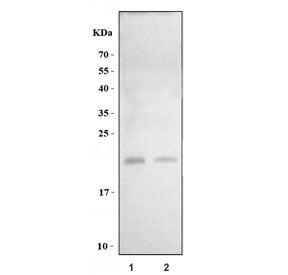
| Application | WB |
| Application Details | Western blot: 1-2ug/ml |
| Application Note | Optimal dilution of the Camp antibody should be determined by the researcher. |
| Immunogen | Amino acids LLRKGGEKFGEKLRKIGQKIKDFFQKLAPEIEQ from the rat protein were used as the immunogen for the Camp antibody. |
| Buffer | Lyophilized from 1X PBS with 2% Trehalose |
| Purity | Antigen affinity purified |
| Storage | After reconstitution, the Camp antibody can be stored for up to one month at 4oC. For long-term, aliquot and store at -20oC. Avoid repeated freezing and thawing. |
| Limitation | This Camp antibody is available for research use only. |
| Uniprot # | G3V8S9 |
| Status | Available |
| PDF Link | https://www.nsjbio.com/tds-pdf/camp-antibody-rq6830 |
| Title | Camp Antibody |
| Description | This gene encodes a member of an antimicrobial peptide family, characterized by a highly conserved N-terminal signal peptide containing a cathelin domain and a structurally variable cationic antimicrobial peptide, which is produced by extracellular proteolysis from the C-terminus. The protein plays an important role in innate immunity defense against viruses. In addition to its antibacterial, antifungal, and antiviral activities, the encoded protein functions in cell chemotaxis, immune mediator induction, and inflammatory response regulation. |
Share