NSJ Bioreagents
SKU:RQ8929
AP2M1 Antibody / AP-2 complex subunit mu
AP2M1 Antibody / AP-2 complex subunit mu
Couldn't load pickup availability
AP2M1 (Adaptor-related protein complex 2 subunit mu 1, AP-2 complex subunit mu) is a critical component of the adaptor protein 2 (AP-2) complex, which is essential for clathrin-mediated endocytosis. This process is responsible for the internalization of receptors, nutrients, and other molecules from the plasma membrane into endocytic vesicles. AP2M1 acts as the medium (mu) subunit of the complex and is directly involved in cargo recognition by binding to specific endocytic motifs on membrane proteins. A AP2M1 antibody is frequently used to study endocytosis, receptor trafficking, and membrane dynamics. <br><br> The AP-2 complex consists of two large subunits (alpha and beta), one medium subunit (mu, encoded by AP2M1), and one small subunit (sigma). Together, they coordinate clathrin recruitment and vesicle formation. AP2M1 is particularly important because of its ability to recognize tyrosine-based sorting signals on transmembrane receptors, ensuring selective cargo uptake. Employing a AP2M1 antibody allows researchers to examine receptor internalization, vesicle trafficking, and signal transduction. <br><br> Alterations in AP2M1 function have been implicated in neurological disorders and developmental abnormalities, as proper endocytic trafficking is vital for synaptic vesicle recycling and neuronal signaling. Dysregulation of AP2M1-mediated pathways may also contribute to cancer progression, viral entry, and other disease processes. Using a AP2M1 antibody provides valuable insights into these mechanisms and helps researchers explore therapeutic strategies targeting endocytic pathways. <br><br> NSJ Bioreagents provides a high-quality AP2M1 antibody validated for applications such as western blot, immunohistochemistry, and immunofluorescence. Choosing an AP2M1 antibody from NSJ Bioreagents ensures reproducible results and reliable detection in studies of endocytosis, receptor trafficking, and cellular signaling.
Specifications
| Family | Primary antibody |
|---|---|
| Formulation | 0.5mg/ml if reconstituted with 0.2ml sterile DI water |
| Format | Antigen affinity purified |
| Host Animal | Rabbit |
| Clonality | Polyclonal (rabbit origin) |
| Isotype | Rabbit IgG |
| Species Reactivity | Human, Mouse, Rat |
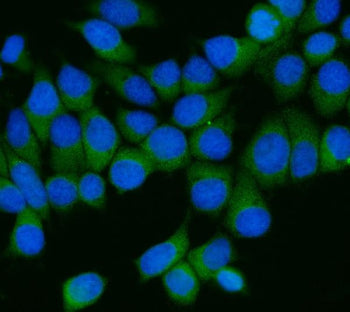
| Application | WB, IHC-P, IF, FACS, ELISA |
| Application Details | Western blot: 1-2ug/ml,Immunohistochemistry (FFPE): 2-5ug/ml,ELISA: 0.1-0.5ug/ml,Immunofluorescence: 5ug/ml,Flow cytometry: 1-3ug/million cells |
| Application Note | Optimal dilution of the AP2M1 antibody should be determined by the researcher. |
| Localization | Cytoplasm, cell membrane |
| Immunogen | Amino acids N9-C435 from the human protein were used as the immunogen for the AP2M1 antibody. |
| Buffer | Lyophilized from 1X PBS with 2% Trehalose |
| Purity | Antigen affinity purified |
| Storage | After reconstitution, the AP2M1 antibody can be stored for up to one month at 4oC. For long-term, aliquot and store at -20oC. Avoid repeated freezing and thawing. |
| Limitation | This AP2M1 antibody is available for research use only. |
| Uniprot # | Q96CW1 |
| Status | Available |
| PDF Link | http://www.nsjbio.com/tds-pdf/ap2m1-antibody-ap-2-complex-subunit-mu-rq8929 |
| Title | AP2M1 Antibody / AP-2 complex subunit mu |
| Description | AP2M1 (Adaptor-related protein complex 2 subunit mu 1, AP-2 complex subunit mu) is a critical component of the adaptor protein 2 (AP-2) complex, which is essential for clathrin-mediated endocytosis. This process is responsible for the internalization of receptors, nutrients, and other molecules from the plasma membrane into endocytic vesicles. AP2M1 acts as the medium (mu) subunit of the complex and is directly involved in cargo recognition by binding to specific endocytic motifs on membrane proteins. A AP2M1 antibody is frequently used to study endocytosis, receptor trafficking, and membrane dynamics. <br><br> The AP-2 complex consists of two large subunits (alpha and beta), one medium subunit (mu, encoded by AP2M1), and one small subunit (sigma). Together, they coordinate clathrin recruitment and vesicle formation. AP2M1 is particularly important because of its ability to recognize tyrosine-based sorting signals on transmembrane receptors, ensuring selective cargo uptake. Employing a AP2M1 antibody allows researchers to examine receptor internalization, vesicle trafficking, and signal transduction. <br><br> Alterations in AP2M1 function have been implicated in neurological disorders and developmental abnormalities, as proper endocytic trafficking is vital for synaptic vesicle recycling and neuronal signaling. Dysregulation of AP2M1-mediated pathways may also contribute to cancer progression, viral entry, and other disease processes. Using a AP2M1 antibody provides valuable insights into these mechanisms and helps researchers explore therapeutic strategies targeting endocytic pathways. <br><br> NSJ Bioreagents provides a high-quality AP2M1 antibody validated for applications such as western blot, immunohistochemistry, and immunofluorescence. Choosing an AP2M1 antibody from NSJ Bioreagents ensures reproducible results and reliable detection in studies of endocytosis, receptor trafficking, and cellular signaling. |
Share