NSJ Bioreagents
SKU:F43434-0.08ML
Anti-TLR8 Antibody
Anti-TLR8 Antibody
Couldn't load pickup availability
The protein encoded by this gene is a member of the Toll-like receptor (TLR) family which plays a fundamental role in pathogen recognition and activation of innate immunity. TLRs are highly conserved from Drosophila to humans and share structural and functional similarities. They recognize pathogen-associated molecular patterns (PAMPs) that are expressed on infectious agents, and mediate the production of cytokines necessary for the development of effective immunity. The various TLRs exhibit different patterns of expression. This gene is predominantly expressed in lung and peripheral blood leukocytes, and lies in close proximity to another family member, TLR7, on chromosome X.
Specifications
| Family | Primary antibody |
|---|---|
| Formulation | In 1X PBS, pH 7.4, with 0.09% sodium azide |
| Format | Antigen affinity purified |
| Host Animal | Rabbit |
| Clonality | Polyclonal (rabbit origin) |
| Isotype | Rabbit Ig |
| Species Reactivity | Human |
| Application | WB, IHC, ELISA |
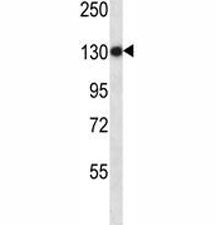
| Application Details | Western blot: 1:1000,IHC (Paraffin): 1:10-1:50 |
| Application Note | Titration of the anti-TLR8 antibody may be required due to differences in protocols and secondary/substrate sensitivity. |
| Localization | Cytoplasmic |
| Immunogen | A portion of amino acids 434-463 from the human protein was used as the immunogen for this anti-TLR8 antibody. |
| Purity | Antigen affinity |
| Storage | Aliquot the anti-TLR8 antibody and store frozen at -20oC or colder. Avoid repeated freeze-thaw cycles. |
| Limitation | This anti-TLR8 antibody is available for research use only. |
| Uniprot # | Q9NR97 |
| Status | Available |
| PDF Link | https://www.nsjbio.com/tds-pdf/anti-tlr8-antibody-f43434 |
| Title | Anti-TLR8 Antibody |
| Description | The protein encoded by this gene is a member of the Toll-like receptor (TLR) family which plays a fundamental role in pathogen recognition and activation of innate immunity. TLRs are highly conserved from Drosophila to humans and share structural and functional similarities. They recognize pathogen-associated molecular patterns (PAMPs) that are expressed on infectious agents, and mediate the production of cytokines necessary for the development of effective immunity. The various TLRs exhibit different patterns of expression. This gene is predominantly expressed in lung and peripheral blood leukocytes, and lies in close proximity to another family member, TLR7, on chromosome X. |
Share