1
/
of
1
NSJ Bioreagents
SKU:RQ4853
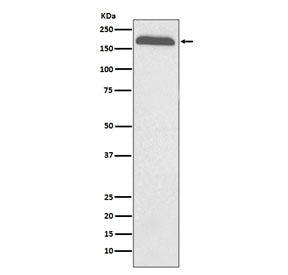
Alpha-2-macroglobulin Antibody / A2M
Alpha-2-macroglobulin Antibody / A2M
Regular price
$449.00 USD
Regular price
Sale price
$449.00 USD
Unit price
/
per
Shipping calculated at checkout.
Couldn't load pickup availability
Alpha-2-macroglobulin is a protease inhibitor and cytokine transporter. It uses a bait-and-trap mechanism to inhibit a broad spectrum of proteases, including trypsin, thrombin and collagenase. It can also inhibit inflammatory cytokines, and it thus disrupts inflammatory cascades. Mutations in this gene are a cause of alpha-2-macroglobulin deficiency. This gene is implicated in Alzheimer's disease (AD) due to its ability to mediate the clearance and degradation of A-beta, the major component of beta-amyloid deposits. [RefSeq]
Specifications
| Family | Primary antibody |
|---|---|
| Formulation | Antibody in PBS with 0.02% sodium azide, 50% glycerol and 0.4-0.5mg/ml BSA |
| Format | Purified |
| Clone | ABAO-1 |
| Host Animal | Rabbit |
| Clonality | Rabbit Monoclonal |
| Isotype | Rabbit IgG |
| Species Reactivity | Human |
| Application | WB |
| Application Details | Western blot: 1:500-1:2000 |
| Application Note | Optimal dilution of the Alpha-2-macroglobulin antibody should be determined by the researcher. |
| Immunogen | A synthetic peptide specific to human A2M / Alpha 2 Macroglobulin was used as the immunogen for the Alpha-2-macroglobulin antibody. |
| Purity | Affinity purified |
| Storage | Store the Alpha-2-macroglobulin antibody at -20oC. |
| Limitation | This Alpha-2-macroglobulin antibody is available for research use only. |
| Uniprot # | P01023 |
| Status | Available |
| PDF Link | https://www.nsjbio.com/tds-pdf/alpha-2-macroglobulin-antibody-a2m-abao-1-rq4853 |
| Title | Alpha-2-macroglobulin Antibody / A2M |
| Description | Alpha-2-macroglobulin is a protease inhibitor and cytokine transporter. It uses a bait-and-trap mechanism to inhibit a broad spectrum of proteases, including trypsin, thrombin and collagenase. It can also inhibit inflammatory cytokines, and it thus disrupts inflammatory cascades. Mutations in this gene are a cause of alpha-2-macroglobulin deficiency. This gene is implicated in Alzheimer's disease (AD) due to its ability to mediate the clearance and degradation of A-beta, the major component of beta-amyloid deposits. [RefSeq] |
Share