1
/
of
1
NSJ Bioreagents
SKU:N1079-25UG
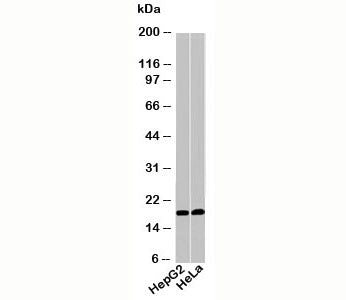
Acid Phosphatase / ACP1 Antibody
Acid Phosphatase / ACP1 Antibody
Regular price
$225.00 USD
Regular price
Sale price
$225.00 USD
Unit price
/
per
Shipping calculated at checkout.
Couldn't load pickup availability
Acid phosphatases (AP) are a broad family of enzymes that differ widely in their AA length and homology, molecular weight and tissue of origin. They function to remove phosphate groups (or dephosphorylate) from proteins and perform best under acidic conditions. Disease states are sometimes characterized by abnormally high or low levels of Acid phosphatase, leading to them being used as serological and histological disease markers. Prostatic Acid Phosphatase (PAP) was initially used as a prostate cancer marker but was later replaced with Prostate Serum Antigen (PSA), a more sensitive early stage cancer marker.
Specifications
| Family | Primary antibody |
|---|---|
| Formulation | 0.5 mg/ml in 1X PBS with 0.1 mg/ml BSA (US sourced), 0.05% sodium azide |
| Format | Purified |
| Host Animal | Rabbit |
| Clonality | Polyclonal (rabbit origin) |
| Isotype | Rabbit IgG |
| Species Reactivity | Human |
| Application | WB |
| Application Details | Western blot: 1-3ug/ml |
| Application Note | <p>Provided assay concentrations are suggestions only, ACP1 antibody titration may be required for optimal results. </p><p>1. This antibody will detect the A, C and D isoforms of Acid Phosphatase.</p> |
| Immunogen | A recombinant protein fragment from the N-terminal portion of Acid Phosphatase / ACP1 was used as the immunogen for this antibody. This AA sequence is common to the A, C and D isoforms. |
| Buffer | 1X PBS, pH 7.4 |
| Purity | Protein A affinity chromatography |
| Storage | Aliquot the ACP1 antibody and store frozen at -20oC or colder. Avoid repeated freeze-thaw cycles. |
| Limitation | This Acid Phosphatase / ACP1 antibody is available for research use only. |
| Status | Available |
| PDF Link | https://www.nsjbio.com/tds-pdf/acid-phosphatase-acp1-antibody-n1079 |
| Title | Acid Phosphatase / ACP1 Antibody |
| Description | Acid phosphatases (AP) are a broad family of enzymes that differ widely in their AA length and homology, molecular weight and tissue of origin. They function to remove phosphate groups (or dephosphorylate) from proteins and perform best under acidic conditions. Disease states are sometimes characterized by abnormally high or low levels of Acid phosphatase, leading to them being used as serological and histological disease markers. Prostatic Acid Phosphatase (PAP) was initially used as a prostate cancer marker but was later replaced with Prostate Serum Antigen (PSA), a more sensitive early stage cancer marker. |
Share