NSJ Bioreagents
SKU:FY12269
ABCD1 Antibody / ATP-binding cassette sub-family D member 1
ABCD1 Antibody / ATP-binding cassette sub-family D member 1
Couldn't load pickup availability
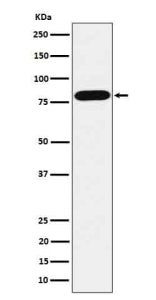
ABCD1 antibody detects ATP-binding cassette sub-family D member 1, a peroxisomal membrane transporter involved in the import of very-long-chain fatty acids (VLCFAs) into peroxisomes for degradation. ABCD1 belongs to the ABC transporter family and is encoded by a gene on the X chromosome. Loss-of-function mutations in ABCD1 cause X-linked adrenoleukodystrophy (X-ALD), a severe metabolic disorder characterized by accumulation of VLCFAs in plasma and tissues, leading to demyelination and adrenal insufficiency.<br><br>Research using ABCD1 antibody has demonstrated its critical role in peroxisomal lipid metabolism. ABCD1 works as a half-transporter that dimerizes, either with itself or with other family members such as ABCD2, to import VLCFAs across the peroxisomal membrane. Disruption of this transport pathway leads to impaired beta-oxidation and pathological lipid accumulation. In the nervous system, VLCFA buildup damages myelin and causes neuroinflammation, while in endocrine tissues it impairs adrenal steroidogenesis.<br><br>Clinical studies highlight ABCD1 as the causative gene in X-ALD, which manifests in childhood cerebral ALD, adrenomyeloneuropathy (AMN), and Addison-only disease. Mutations in ABCD1 result in variable phenotypes, even within the same family, suggesting additional genetic and environmental modifiers. Antibody-based detection of ABCD1 supports diagnostic studies and research into genotype-phenotype correlations.<br><br>In therapeutic research, ABCD1 is a target for gene therapy and stem cell transplantation, both of which aim to restore peroxisomal function and prevent neurological decline. Monitoring ABCD1 expression with antibodies enables evaluation of therapeutic efficacy. Studies also indicate compensatory roles for ABCD2 and ABCD3 transporters, making antibody-based tools essential for dissecting overlapping functions.<br><br>Antibodies against ABCD1 are validated for immunohistochemistry, western blot, and immunofluorescence. These reagents allow detection of peroxisomal localization, quantification of expression, and investigation of functional restoration in therapeutic models. By enabling precise measurement of ABCD1, they support basic, clinical, and translational research.<br><br>NSJ Bioreagents supplies this ABCD1 antibody for studies in peroxisomal metabolism, neurodegeneration, and rare genetic disorders.
Specifications
| Family | Primary antibody |
|---|---|
| Formulation | Rabbit IgG in phosphate buffered saline, pH 7.4, 150mM NaCl, 0.02% sodium azide and 50% glycerol, 0.4-0.5mg/ml BSA |
| Format | Liquid |
| Clone | 30A99 |
| Host Animal | Rabbit |
| Clonality | Recombinant Rabbit Monoclonal |
| Isotype | Rabbit IgG |
| Species Reactivity | Human, Mouse, Rat |
| Application | WB, ICC, IF, FACS |
| Application Details | Western blot: 1:500-1:2000,Immunocytochemistry/Immunofluorescence: 1:50-1:200,Flow Cytometry: 1:50 |
| Application Note | Optimal dilution of the ABCD1 antibody should be determined by the researcher. |
| Immunogen | A synthesized peptide derived from human ABCD1 / ALD was used as the immunogen for the ABCD1 antibody. |
| Buffer | Rabbit IgG in phosphate buffered saline, pH 7.4, 150mM NaCl, 0.02% sodium azide and 50% glycerol, 0.4-0.5mg/ml BSA. |
| Purity | Affinity-chromatography |
| Storage | Store the ABCD1 antibody at -20oC. |
| Limitation | This ABCD1 antibody is available for research use only. |
| Uniprot # | P33897 |
| Status | Available |
| PDF Link | http://www.nsjbio.com/tds-pdf/abcd1-antibody-atp-binding-cassette-sub-family-d-member-1-fy12269-nsj-bioreagents |
| Title | ABCD1 Antibody / ATP-binding cassette sub-family D member 1 |
| Description | ABCD1 antibody detects ATP-binding cassette sub-family D member 1, a peroxisomal membrane transporter involved in the import of very-long-chain fatty acids (VLCFAs) into peroxisomes for degradation. ABCD1 belongs to the ABC transporter family and is encoded by a gene on the X chromosome. Loss-of-function mutations in ABCD1 cause X-linked adrenoleukodystrophy (X-ALD), a severe metabolic disorder characterized by accumulation of VLCFAs in plasma and tissues, leading to demyelination and adrenal insufficiency.<br><br>Research using ABCD1 antibody has demonstrated its critical role in peroxisomal lipid metabolism. ABCD1 works as a half-transporter that dimerizes, either with itself or with other family members such as ABCD2, to import VLCFAs across the peroxisomal membrane. Disruption of this transport pathway leads to impaired beta-oxidation and pathological lipid accumulation. In the nervous system, VLCFA buildup damages myelin and causes neuroinflammation, while in endocrine tissues it impairs adrenal steroidogenesis.<br><br>Clinical studies highlight ABCD1 as the causative gene in X-ALD, which manifests in childhood cerebral ALD, adrenomyeloneuropathy (AMN), and Addison-only disease. Mutations in ABCD1 result in variable phenotypes, even within the same family, suggesting additional genetic and environmental modifiers. Antibody-based detection of ABCD1 supports diagnostic studies and research into genotype-phenotype correlations.<br><br>In therapeutic research, ABCD1 is a target for gene therapy and stem cell transplantation, both of which aim to restore peroxisomal function and prevent neurological decline. Monitoring ABCD1 expression with antibodies enables evaluation of therapeutic efficacy. Studies also indicate compensatory roles for ABCD2 and ABCD3 transporters, making antibody-based tools essential for dissecting overlapping functions.<br><br>Antibodies against ABCD1 are validated for immunohistochemistry, western blot, and immunofluorescence. These reagents allow detection of peroxisomal localization, quantification of expression, and investigation of functional restoration in therapeutic models. By enabling precise measurement of ABCD1, they support basic, clinical, and translational research.<br><br>NSJ Bioreagents supplies this ABCD1 antibody for studies in peroxisomal metabolism, neurodegeneration, and rare genetic disorders. |
Share