Cloud-clone
SKU:PAB243Ra01
Polyclonal Antibody to Heart-type Fatty Acid Binding Protein (H-FABP)
Polyclonal Antibody to Heart-type Fatty Acid Binding Protein (H-FABP)
Couldn't load pickup availability
Immunohistochemistry: 5-20µg/mL;1:25-100
Immunocytochemistry: 5-20µg/mL;1:25-100
Optimal working dilutions must be determined by end user.
Product No.
PAB243Ra01
Organism Species
Rattus norvegicus (Rat).
Source
Polyclonal antibody preparation
Host
Rabbit
Potency
n/a
Ig Type
IgG
Purification
Antigen-specific affinity chromatography followed by Protein A affinity chromatography
Label
None
Immunogen
RPB243Ra01-Recombinant Heart-type Fatty Acid Binding Protein (H-FABP)
Buffer Formulation
PBS, pH7.4, containing 0.01% SKL, 1mM DTT, 5% Trehalose and Proclin300.
Traits
Liquid
Concentration
500µg/mL
Organism Species More
Homo sapiens (Human), Mus musculus (Mouse), Sus scrofa; Porcine (Pig)
Applications
WB; IHC; ICC; IP.
If the antibody is used in flow cytometry, please check FCM antibodies.
UOM
20µl 100µl 200µl 1ml 10ml
SPECIFITY
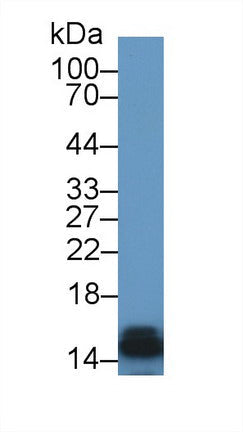
The antibody is a rabbit polyclonal antibody raised against H-FABP. It has been selected for its ability to recognize H-FABP in immunohistochemical staining and western blotting.
USAGE
Western blotting: 0.2-2µg/mL;1:250-2500
Immunohistochemistry: 5-20µg/mL;1:25-100
Immunocytochemistry: 5-20µg/mL;1:25-100
Optimal working dilutions must be determined by end user.
STORAGE
Store at 4°C for frequent use. Stored at -20°C in a manual defrost freezer for two year without detectable loss of activity. Avoid repeated freeze-thaw cycles.
STABILITY
The thermal stability is described by the loss rate. The loss rate was determined by accelerated thermal degradation test, that is, incubate the protein at 37°C for 48h, and no obvious degradation and precipitation were observed. The loss rate is less than 5% within the expiration date under appropriate storage condition.
| Magazine | Citations |
| Molecular Medicine Reports | Protective effects of N (2)‑L‑alanyl‑L‑glutamine mediated by the JAK2/STAT3 signaling pathway on myocardial ischemia reperfusion Pubmed:29393473 |
| Oncology Letters | Hydrogen‑rich solution attenuates myocardial injury caused by cardiopulmonary bypass in rats via the Janus‑activated kinase 2/signal transducer and activator of … Pubmed:29928398 |
| FASEB Journal | Signature-oriented investigation of the efficacy of multicomponent drugs against heart failure Pubmed: 30230922 |
Share