Cloud-clone
SKU:RPD073Hu01
Recombinant Carbonic Anhydrase VI (CA6)
Recombinant Carbonic Anhydrase VI (CA6)
Couldn't load pickup availability
Prokaryotic expression
Product No.
RPD073Hu01
Organism Species
Homo sapiens (Human).
Source
Prokaryotic expression
Host
E.coli
Endotoxin Level
<1.0EU per 1µg (determined by the LAL method)
Subcellular Location
Secreted
Predicted Molecular Mass
63.8kDa
Accurate Molecular Mass
66kDa(Analysis of differences refer to the manual)
Residues & Tags
Gln18~Asn308 with N-terminal His and GST Tag
Buffer Formulation
20mM Tris, 150mM NaCl, pH8.0, containing 1mM EDTA, 1mM DTT, 0.01% SKL, 5% Trehalose and Proclin300.
Traits
Freeze-dried powder
Purity
> 90%
Isoelectric Point
6.4
Applications
Positive Control; Immunogen; SDS-PAGE; WB.
If bio-activity of the protein is needed, please check active protein.
UOM
10µg 50µg 200µg 1mg 5mg
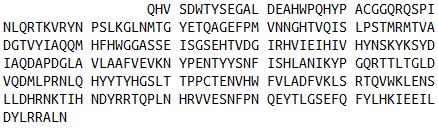
SEQUENCE
USAGE
Reconstitute in 20mM Tris, 150mM NaCl (pH8.0) to a concentration of 0.1-1.0 mg/mL. Do not vortex.
STORAGE
Avoid repeated freeze/thaw cycles. Store at 2-8°C for one month. Aliquot and store at -80°C for 12 months.
STABILITY
The thermal stability is described by the loss rate. The loss rate was determined by accelerated thermal degradation test, that is, incubate the protein at 37°C for 48h, and no obvious degradation and precipitation were observed. The loss rate is less than 5% within the expiration date under appropriate storage condition.
| Magazine | Citations |
| Metabolomics | Salivary markers of taste sensitivity to oleic acid: a combined proteomics and metabolomics approach Springer: Source |
| American Journal of Immunology | SALIVARY CARBONIC ANHYDRASE VI, ZINC SULFATE TASTE ACUITY AND FREQUENCY OF ILLNESS: A PILOT STUDY Com:Source |
| Physiol Behav. | Associations between food consumption patterns and saliva composition: Specificities of eating difficulties children. pubmed:28185876 |
| Chemical Senses | Differences in the density of fungiform papillae and composition of saliva in patients with taste disorders compared to healthy controls pubmed:28981826 |
| Caries research | Children with a Higher Activity of Carbonic Anhydrase VI in Saliva Are More Likely to Develop Dental Caries. pubmed:28633135 |
| Scientific Reports | Obese Subjects With Specific Gustatory Papillae Microbiota and Salivary Cues Display an Impairment to Sense Lipids Pubmed:29713004 |
| Appetite | Acceptance of added fat to first complementary feeding purees: An exploration of fat type, feeding history and saliva composition Pubmed: 30172680 |
| International journal of molecular sciences | Activity of Carbonic Anhydrase VI is Higher in Dental Biofilm of Children with Caries Pubmed: 31151296 |
| Acta Odontol Scand | Polymorphism in the CAVI gene, salivary properties and dental caries Pubmed: 32013665 |
| Catalog No. | Related products for research use of Homo sapiens (Human) Organism species | Applications (RESEARCH USE ONLY!) |
| RPD073Hu01 | Recombinant Carbonic Anhydrase VI (CA6) | Positive Control; Immunogen; SDS-PAGE; WB. |
| PAD073Hu01 | Polyclonal Antibody to Carbonic Anhydrase VI (CA6) | WB; IHC; ICC; IP. |
| MAD073Hu21 | Monoclonal Antibody to Carbonic Anhydrase VI (CA6) | WB; IHC; ICC; IP. |
| SED073Hu | ELISA Kit for Carbonic Anhydrase VI (CA6) | Enzyme-linked immunosorbent assay for Antigen Detection. |
| LMD073Hu | Magnetic Luminex Assay Kit for Carbonic Anhydrase VI (CA6) ,etc. | Magnetic Luminex Assay for Antigen Detection. |