

Cloud-clone
SKU:APA024Hu01
Active Endocrine Gland Derived Vascular Endothelial Growth Factor (EG-VEGF)
Active Endocrine Gland Derived Vascular Endothelial Growth Factor (EG-VEGF)
Couldn't load pickup availability
Product No.
APA024Hu01
Organism Species
Homo sapiens (Human).
Buffer Formulation
20mM Tris, 150mM NaCl, pH8.0, containing 1mM EDTA, 1mM DTT, 0.01% SKL, 5% Trehalose and Proclin300.
Traits
Freeze-dried powder
Purity
> 90%
Isoelectric Point
8.1
Applications
Cell culture; Activity Assays.
UOM
10µg 50µg 200µg 1mg 5mg
ACTIVITY TEST
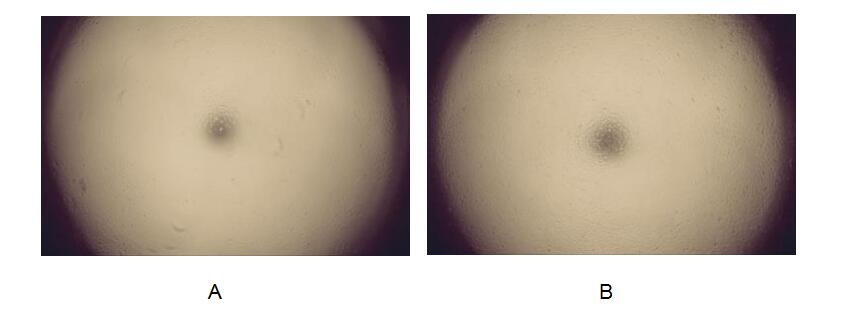
Figure 1. Cell proliferation of ECV-304 cells after stimulated with EG-VEGF.
Endothelial gland-derived VEGF (EG-VEGF) is an angiogenic protein that is structurally unrelated to VEGF. It is expressed in steroidogenic tissues such as adrenal gland, ovary, testis, and placenta. Like VEGF it can induce fenestrae in endothelial cells. To test the effect of EG-VEGF on cell proliferation of ECV-304 endothelium cell line, cells were seeded into triplicate wells of 96-well plates at a density of 5,000 cells/well and allowed to attach overnight, then the medium was replaced with serum-free standard DMEM prior to the addition of various concentrations of EG-VEGF. After incubated for 72h, cells were observed by inverted microscope and cell proliferation was measured by Cell Counting Kit-8 (CCK-8). Briefly, 10µL of CCK-8 solution was added to each well of the plate, then measure the absorbance at 450nm using a microplate reader after incubating the plate for 1-4 hours at 37℃.
(A) Unstimulated ECV-304 cells cultured in 1640 for 96h;
(B) ECV-304 cells cultured in 1640, stimulated with 10ng/mL VEGF121 for 96h.
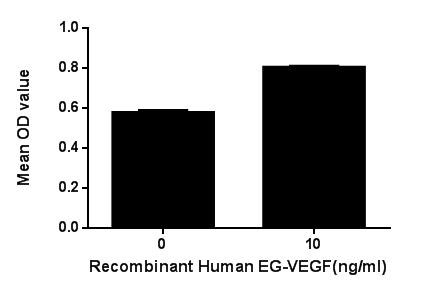
Figure. Cell proliferation of ECV-304 cells after stimulated with EG-VEGF
USAGE
Reconstitute in 20mM Tris, 150mM NaCl (PH8.0) to a concentration of 0.1-1.0 mg/mL. Do not vortex.
STORAGE
Avoid repeated freeze/thaw cycles. Store at 2-8°C for one month. Aliquot and store at -80°C for 12 months.
STABILITY
The thermal stability is described by the loss rate. The loss rate was determined by accelerated thermal degradation test, that is, incubate the protein at 37°C for 48h, and no obvious degradation and precipitation were observed. The loss rate is less than 5% within the expiration date under appropriate storage condition.
| Magazine | Citations |
| Tumor Biology | Hypoxia-induced secretion of IL-14 from adipose-derived mesenchymal stem cell promotes growth and cancer stem cell properties of Burkitt lymphoma PubMed: 26695151 |
| Stem Cells and Development | Lower Senescence of Adipose-Derived Stem Cells than Donor-Matched Bone Marrow Stem Cells for Surgical Ventricular Restoration Pubmed:29630447 |
