Cloud-clone
SKU:LMB280Hu
Magnetic Luminex Assay Kit for Cathepsin D (CTSD) ,etc.
Magnetic Luminex Assay Kit for Cathepsin D (CTSD) ,etc.
Couldn't load pickup availability
Product No.
LMB280Hu
Organism Species
Homo sapiens (Human).
Sample Type
Serum, plasma, tissue homogenates and other biological fluids
Test Method
Double-antibody Sandwich
Assay Length
3.5h
Detection Range
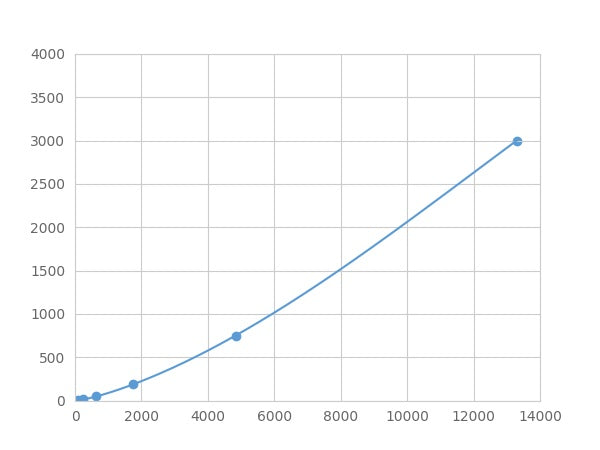
2.93-3000pg/mL
Sensitivity
The minimum detectable dose of this kit is typically less than 0.977 pg/mL.
UOM
1Plex 2Plex 3Plex 4Plex 5Plex 6Plex 7Plex 8Plex
Specificity
This assay has high sensitivity and excellent specificity for detection of Cathepsin D (CTSD) ,etc..
No significant cross-reactivity or interference between Cathepsin D (CTSD) ,etc. and analogues was observed.
Recovery
Matrices listed below were spiked with certain level of recombinant Cathepsin D (CTSD) ,etc. and the recovery rates were calculated by comparing the measured value to the expected amount of Cathepsin D (CTSD) ,etc. in samples.
| Matrix | Recovery range (%) | Average(%) |
| serum(n=5) | 79-97 | 86 |
| EDTA plasma(n=5) | 80-94 | 89 |
| heparin plasma(n=5) | 80-91 | 83 |
Precision
Intra-assay Precision (Precision within an assay): 3 samples with low, middle and high level Cathepsin D (CTSD) ,etc. were tested 20 times on one plate, respectively.
Inter-assay Precision (Precision between assays): 3 samples with low, middle and high level Cathepsin D (CTSD) ,etc. were tested on 3 different plates, 8 replicates in each plate.
CV(%) = SD/meanX100
Intra-Assay: CV<10%
Inter-Assay: CV<12%
Linearity
The linearity of the kit was assayed by testing samples spiked with appropriate concentration of Cathepsin D (CTSD) ,etc. and their serial dilutions. The results were demonstrated by the percentage of calculated concentration to the expected.
| Sample | 1:2 | 1:4 | 1:8 | 1:16 |
| serum(n=5) | 80-96% | 97-104% | 97-105% | 93-105% |
| EDTA plasma(n=5) | 90-104% | 80-97% | 79-101% | 78-96% |
| heparin plasma(n=5) | 86-95% | 95-102% | 91-99% | 90-104% |
Stability
The stability of kit is determined by the loss rate of activity. The loss rate of this kit is less than 5% within the expiration date under appropriate storage condition.
To minimize extra influence on the performance, operation procedures and lab conditions, especially room temperature, air humidity, incubator temperature should be strictly controlled. It is also strongly suggested that the whole assay is performed by the same operator from the beginning to the end.
Reagents and materials provided
| Reagents | Quantity | Reagents | Quantity |
| 96-well plate | 1 | Plate sealer for 96 wells | 4 |
| Pre-Mixed Standard | 2 | Standard Diluent | 1×20mL |
| Pre-Mixed Magnetic beads (22#:CTSD) | 1 | Analysis buffer | 1×20mL |
| Pre-Mixed Detection Reagent A | 1×120μL | Assay Diluent A | 1×12mL |
| Detection Reagent B (PE-SA) | 1×120μL | Assay Diluent B | 1×12mL |
| Sheath Fluid | 1×10mL | Wash Buffer (30 × concentrate) | 1×20mL |
| Instruction manual | 1 |
Assay procedure summary
1. Preparation of standards, reagents and samples before the experiment;
2. Add 100μL standard or sample to each well,
add 10μL magnetic beads, and incubate 90min at 37°C on shaker;
3. Remove liquid on magnetic frame, add 100μL prepared Detection Reagent A. Incubate 60min at 37°C on shaker;
4. Wash plate on magnetic frame for three times;
5. Add 100μL prepared Detection Reagent B, and incubate 30 min at 37°C on shaker;
6. Wash plate on magnetic frame for three times;
7. Add 100μL sheath solution, swirl for 2 minutes, read on the machine.
| Magazine | Citations |
| Molecular Immunology | Cathepsin D is released after severe tissue trauma in vivo and is capable of generating C5a in vitro ScienceDirect: S0161589011008297 |
| 21 | Plasma Cathepsin D Levels: A Novel Tool to Predict Pediatric Hepatic Inflammation PubMed: 25732418 |
| Scientific Reportes | Plasma cathepsin D correlates with histological classifications of fatty liver disease in adults and responds to intervention pubmed:27922112 |
| Biomedicine & pharmacotherapy | Berberine ameliorates intrahippocampal kainate-induced status epilepticus and consequent epileptogenic process in the rat: Underlying mechanisms pubmed:28061403 |
| JGH OPEN | Limited applicability of cathepsin D for the diagnosis and monitoring of non‐alcoholic steatohepatitis |
| Diabetologia | Plasma cathepsin D activity is negatively associated with hepatic insulin sensitivity in overweight and obese humans Pubmed: 31690989 |
| Antioxidants | Iron and Advanced Glycation End Products: Emerging Role of Iron in Androgen Deficiency in Obesity Pubmed: 32235809 |
| Peptides | LVV-hemorphin-7 (LVV-H7) plays a role in antinociception in a rat model of alcohol-induced pain disorders 33253777 |
| Cells | Identification of Cathepsin D as a Plasma Biomarker for Alzheimer's Disease 33445607 |
| J Chem Neuroanat | Analysis of silymarin-modulating effects against acrylamide-induced cerebellar damage in male rats: Biochemical and pathological markers 33965515 |
| Front Cell Infect Microbiol | PGRS Domain of Rv0297 of Mycobacterium tuberculosis Is Involved in Modulation of Macrophage Functions to Favor Bacterial Persistence 33042856 |
| Nutr Metab Cardiovasc Dis | Serum CathepsinD in pregnancy: relation with metabolic and inflammatory markers and effects of fish oils and probiotics Pubmed:35304048 |
| Biosensors | A Comparison of Various Chips Used for the Manufacture of Biosensors Applied in Non-Fluidic Array SPRi, Based on the Example of Determination of Cathepsin D Pubmed:35049649 |
| Catalog No. | Related products for research use of Homo sapiens (Human) Organism species | Applications (RESEARCH USE ONLY!) |
| APB280Hu61 | Active Cathepsin D (CTSD) | Cell culture; Activity Assays. |
| EPB280Hu61 | Eukaryotic Cathepsin D (CTSD) | Positive Control; Immunogen; SDS-PAGE; WB. |
| RPB280Hu01 | Recombinant Cathepsin D (CTSD) | Positive Control; Immunogen; SDS-PAGE; WB. |
| EPB280Hu62 | Eukaryotic Cathepsin D (CTSD) | Positive Control; Immunogen; SDS-PAGE; WB. |
| RPB280Hu02 | Recombinant Cathepsin D (CTSD) | Positive Control; Immunogen; SDS-PAGE; WB. |
| RPB280Hu03 | Recombinant Cathepsin D (CTSD) | Positive Control; Immunogen; SDS-PAGE; WB. |
| RPB280Hu04 | Recombinant Cathepsin D (CTSD) | Positive Control; Immunogen; SDS-PAGE; WB. |
| PAB280Hu02 | Polyclonal Antibody to Cathepsin D (CTSD) | WB; IHC; ICC; IP. |
| PAB280Hu01 | Polyclonal Antibody to Cathepsin D (CTSD) | WB; IHC; ICC; IP. |
| LAB280Hu71 | Biotin-Linked Polyclonal Antibody to Cathepsin D (CTSD) | WB; IHC; ICC. |
| MAB280Hu21 | Monoclonal Antibody to Cathepsin D (CTSD) | WB; IHC; ICC; IP. |
| MAB280Hu26 | Monoclonal Antibody to Cathepsin D (CTSD) | WB; IHC; ICC; IP. |
| MAB280Hu22 | Monoclonal Antibody to Cathepsin D (CTSD) | WB; IHC; ICC; IP. |
| SEB280Hu | ELISA Kit for Cathepsin D (CTSD) | Enzyme-linked immunosorbent assay for Antigen Detection. |
| HEB280Hu | High Sensitive ELISA Kit for Cathepsin D (CTSD) | Enzyme-linked immunosorbent assay for Antigen Detection. |
| LMB280Hu | Magnetic Luminex Assay Kit for Cathepsin D (CTSD) ,etc. | Magnetic Luminex Assay for Antigen Detection. |
Share