Cloud-clone
SKU:LMB499Mu
Magnetic Luminex Assay Kit for Tumor Necrosis Factor Receptor 1 (TNFR1) ,etc.
Magnetic Luminex Assay Kit for Tumor Necrosis Factor Receptor 1 (TNFR1) ,etc.
Couldn't load pickup availability
Product No.
LMB499Mu
Organism Species
Mus musculus (Mouse).
Sample Type
Serum, plasma, tissue homogenates, cell lysates and other biological fluids.
Test Method
Double-antibody Sandwich
Assay Length
3.5h
Detection Range
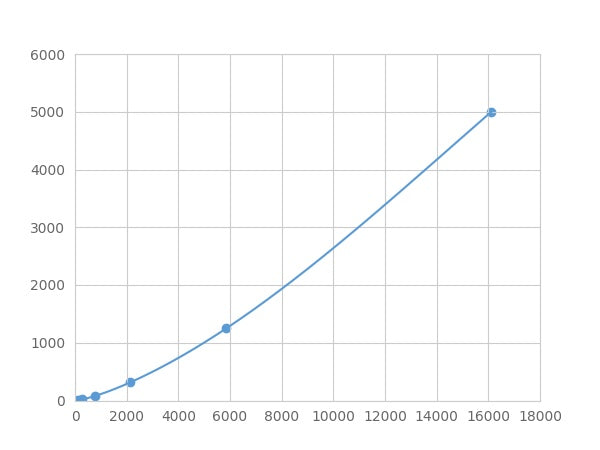
4.88-5000pg/mL
Sensitivity
The minimum detectable dose of this kit is typically less than 1.627 pg/mL.
UOM
1Plex 2Plex 3Plex 4Plex 5Plex 6Plex 7Plex 8Plex
Specificity
This assay has high sensitivity and excellent specificity for detection of Tumor Necrosis Factor Receptor 1 (TNFR1) ,etc..
No significant cross-reactivity or interference between Tumor Necrosis Factor Receptor 1 (TNFR1) ,etc. and analogues was observed.
Recovery
Matrices listed below were spiked with certain level of recombinant Tumor Necrosis Factor Receptor 1 (TNFR1) ,etc. and the recovery rates were calculated by comparing the measured value to the expected amount of Tumor Necrosis Factor Receptor 1 (TNFR1) ,etc. in samples.
| Matrix | Recovery range (%) | Average(%) |
| serum(n=5) | 93-104 | 99 |
| EDTA plasma(n=5) | 87-101 | 93 |
| heparin plasma(n=5) | 92-101 | 95 |
Precision
Intra-assay Precision (Precision within an assay): 3 samples with low, middle and high level Tumor Necrosis Factor Receptor 1 (TNFR1) ,etc. were tested 20 times on one plate, respectively.
Inter-assay Precision (Precision between assays): 3 samples with low, middle and high level Tumor Necrosis Factor Receptor 1 (TNFR1) ,etc. were tested on 3 different plates, 8 replicates in each plate.
CV(%) = SD/meanX100
Intra-Assay: CV<10%
Inter-Assay: CV<12%
Linearity
The linearity of the kit was assayed by testing samples spiked with appropriate concentration of Tumor Necrosis Factor Receptor 1 (TNFR1) ,etc. and their serial dilutions. The results were demonstrated by the percentage of calculated concentration to the expected.
| Sample | 1:2 | 1:4 | 1:8 | 1:16 |
| serum(n=5) | 98-105% | 84-98% | 81-94% | 85-92% |
| EDTA plasma(n=5) | 90-101% | 78-105% | 85-101% | 96-105% |
| heparin plasma(n=5) | 94-103% | 78-101% | 94-101% | 96-105% |
Stability
The stability of kit is determined by the loss rate of activity. The loss rate of this kit is less than 5% within the expiration date under appropriate storage condition.
To minimize extra influence on the performance, operation procedures and lab conditions, especially room temperature, air humidity, incubator temperature should be strictly controlled. It is also strongly suggested that the whole assay is performed by the same operator from the beginning to the end.
Reagents and materials provided
| Reagents | Quantity | Reagents | Quantity |
| 96-well plate | 1 | Plate sealer for 96 wells | 4 |
| Pre-Mixed Standard | 2 | Standard Diluent | 1×20mL |
| Pre-Mixed Magnetic beads (22#:TNFR1) | 1 | Analysis buffer | 1×20mL |
| Pre-Mixed Detection Reagent A | 1×120μL | Assay Diluent A | 1×12mL |
| Detection Reagent B (PE-SA) | 1×120μL | Assay Diluent B | 1×12mL |
| Sheath Fluid | 1×10mL | Wash Buffer (30 × concentrate) | 1×20mL |
| Instruction manual | 1 |
Assay procedure summary
1. Preparation of standards, reagents and samples before the experiment;
2. Add 100μL standard or sample to each well,
add 10μL magnetic beads, and incubate 90min at 37°C on shaker;
3. Remove liquid on magnetic frame, add 100μL prepared Detection Reagent A. Incubate 60min at 37°C on shaker;
4. Wash plate on magnetic frame for three times;
5. Add 100μL prepared Detection Reagent B, and incubate 30 min at 37°C on shaker;
6. Wash plate on magnetic frame for three times;
7. Add 100μL sheath solution, swirl for 2 minutes, read on the machine.
| Magazine | Citations |
| PLoS ONE | A Combinatorial Relative Mass Value Evaluation of Endogenous Bioactive Proteins in Three-Dimensional Cultured Nucleus Pulposus Cells of Herniated Intervertebral Discs: Identification of Potential Target Proteins for Gene Therapeutic Approaches Plosone: Source |
| Mediators of Inflammation | High Glucose Level Disturbs the Resveratrol-Evoked Curtailment of CX3CL1/CX3CR1 Signaling in Human Placental Circulation pubmed:28655972 |
| Annals of Neurology | High complement levels in astrocyte‐derived exosomes of Alzheimer disease Pubmed:29406582 |
| International Journal of Immunopathology and Pharmacology | VEGF-R2 and TNF-R1 expression and cytokine production by samples of mammary adenocarcinomas and correlations with histopathological parameters of these … Pubmed:29985074 |
| Cell Death & Disease | Inhibition of transmembrane TNF-α shedding by a specific antibody protects against septic shock Pubmed: 31383857 |
| Journal of Cardiovascular Translational Research | XPO1 Gene Therapy Attenuates Cardiac Dysfunction in Rats with Chronic Induced Myocardial Infarction Pubmed: 31768947 |
| Frontiers in Pharmacology | M10, a Myricetin-3-ObD-Lactose Sodium Salt, Prevents Ulcerative Colitis Through Inhibiting Necroptosis in Mice Pubmed: 33041798 |
| Catalog No. | Related products for research use of Mus musculus (Mouse) Organism species | Applications (RESEARCH USE ONLY!) |
| RPB499Mu01 | Recombinant Tumor Necrosis Factor Receptor 1 (TNFR1) | Positive Control; Immunogen; SDS-PAGE; WB. |
| PAB499Mu01 | Polyclonal Antibody to Tumor Necrosis Factor Receptor 1 (TNFR1) | WB; IHC; ICC; IP. |
| LAB499Mu71 | Biotin-Linked Polyclonal Antibody to Tumor Necrosis Factor Receptor 1 (TNFR1) | WB; IHC; ICC. |
| SEB499Mu | ELISA Kit for Tumor Necrosis Factor Receptor 1 (TNFR1) | Enzyme-linked immunosorbent assay for Antigen Detection. |
| LMB499Mu | Magnetic Luminex Assay Kit for Tumor Necrosis Factor Receptor 1 (TNFR1) ,etc. | Magnetic Luminex Assay for Antigen Detection. |
Share