FineTest
SKU:FNab00943
anti- BRCA1 antibody
anti- BRCA1 antibody
Couldn't load pickup availability
Explore the multifunctional roles of BRCA1 (Breast Cancer Susceptibility Gene 1) with our Anti-BRCA1 Antibody, available in a 100µg size. This high-quality antibody is your gateway to investigating the functions and interactions of BRCA1 in DNA repair, genome stability, and breast cancer biology.
Engineered for precision and versatility, this antibody is suitable for applications such as chromatin immunoprecipitation, immunohistochemistry, and co-immunoprecipitation. Whether you're unraveling BRCA1's involvement in homologous recombination, transcriptional regulation, or tumor suppression, this antibody enhances your research capabilities.
BRCA1 is a critical tumor suppressor gene known for its multifaceted roles in DNA repair, cell cycle control, and the maintenance of genomic integrity. Mutations in BRCA1 are linked to hereditary breast and ovarian cancer syndromes.
With our Anti-BRCA1 Antibody, you can explore BRCA1's functionality, investigate its interactions with DNA repair complexes, and potentially advance research in cancer genetics and therapy. Elevate your research in DNA repair mechanisms and hereditary cancer predisposition with this precision antibody.
Product Name
BRCA1 antibody
Size
100µg
Form
liquid
Purification
Immunogen affinity purified
Purity
≥95% as determined by SDS-PAGE
Host
Rabbit
Clonality
polyclonal
Isotype
IgG
Storage
PBS with 0.02% sodium azide and 50% glycerol pH 7.3, -20℃ for 12 months(Avoid repeated freeze / thaw cycles.)
BACKGROUND
E3 ubiquitin-protein ligase that specifically mediates the formation of 'Lys-6'-linked polyubiquitin chains and plays a central role in DNA repair by facilitating cellular responses to DNA damage. It is unclear whether it also mediates the formation of other types of polyubiquitin chains. The E3 ubiquitin-protein ligase activity is required for its tumor suppressor function. The BRCA1-BARD1 heterodimer coordinates a diverse range of cellular pathways such as DNA damage repair, ubiquitination and transcriptional regulation to maintain genomic stability. Regulates centrosomal microtubule nucleation. Required for normal cell cycle progression from G2 to mitosis. Required for appropriate cell cycle arrests after ionizing irradiation in both the S-phase and the G2 phase of the cell cycle. Involved in transcriptional regulation of P21 in response to DNA damage. Required for FANCD2 targeting to sites of DNA damage. May function as a transcriptional regulator. Inhibits lipid synthesis by binding to inactive phosphorylated ACACA and preventing its dephosphorylation. Contributes to homologous recombination repair(HRR) via its direct interaction with PALB2, fine-tunes recombinational repair partly through its modulatory role in the PALB2-dependent loading of BRCA2-RAD51 repair machinery at DNA breaks. Component of the BRCA1-RBBP8 complex which regulates CHEK1 activation and controls cell cycle G2/M checkpoints on DNA damage via BRCA1-mediated ubiquitination of RBBP8. Acts as a transcriptional activator(PubMed:20160719).
IMMUNOGEN INFORMATION
Immunogen
breast cancer 1, early onset
Synonyms
RNF53
Observed MW
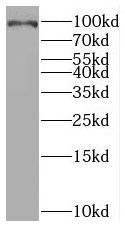
85-95 kDa
APPLICATION
Tested Application
ELISA, IHC, WB
Recommended Dilution
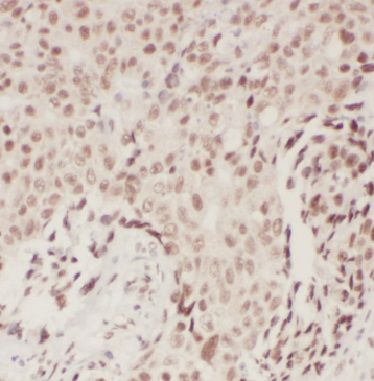
WB: 1:500-1:2000; IHC: 1:20-1:200
UNIPROT INFORMATION
UniProt ID
IMAGES