FineTest
SKU:FNab00970
anti- BST2 antibody
anti- BST2 antibody
Couldn't load pickup availability
Study BST2 (Bone Marrow Stromal Antigen 2) with our Anti-BST2 Antibody, available in a 100µg size. This high-quality antibody is your indispensable tool for investigating BST2's roles in viral restriction, immune response modulation, and cancer biology.
Engineered for precision and versatility, this antibody ensures exceptional sensitivity in applications such as flow cytometry, immunofluorescence, and immunoprecipitation. Whether you're exploring BST2's involvement in interferon-induced pathways, viral particle retention, or its interactions with immune evasion strategies, this antibody empowers your research with accuracy and reliability.
BST2, a type II transmembrane protein, is known for its antiviral properties and associations with various cancers. Understanding BST2's functions and its regulatory networks is fundamental in deciphering its contributions to innate immunity and disease pathogenesis.
With our Anti-BST2 Antibody, you can delve into BST2's functionality, explore its role in viral restriction, and potentially advance research in antiviral therapies and immune modulation. Elevate your research in viral infections and cancer immunology with this precision antibody.
Product Name
BST2 antibody
Size
100µg
Form
liquid
Purification
Immunogen affinity purified
Purity
≥95% as determined by SDS-PAGE
Host
Rabbit
Clonality
polyclonal
Isotype
IgG
Storage
PBS with 0.02% sodium azide and 50% glycerol pH 7.3, -20℃ for 12 months(Avoid repeated freeze / thaw cycles.)
BACKGROUND
IFN-induced antiviral host restriction factor which efficiently blocks the release of diverse mammalian enveloped viruses by directly tethering nascent virions to the membranes of infected cells. Acts as a direct physical tether, holding virions to the cell membrane and linking virions to each other. The tethered virions can be internalized by endocytosis and subsequently degraded or they can remain on the cell surface. In either case, their spread as cell-free virions is restricted. Its target viruses belong to diverse families, including retroviridae: human immunodeficiency virus type 1(HIV-1), human immunodeficiency virus type 2(HIV-2), simian immunodeficiency viruses(SIVs), equine infectious anemia virus(EIAV), feline immunodeficiency virus(FIV), prototype foamy virus(PFV), Mason-Pfizer monkey virus(MPMV), human T-cell leukemia virus type 1(HTLV-1), Rous sarcoma virus(RSV) and murine leukemia virus(MLV), flavivirideae: hepatitis C virus(HCV), filoviridae: ebola virus(EBOV) and marburg virus(MARV), arenaviridae: lassa virus(LASV) and machupo virus(MACV), herpesviridae: kaposis sarcoma-associated herpesvirus(KSHV), rhabdoviridae: vesicular stomatitis virus(VSV), orthomyxoviridae: influenza A virus, and paramyxoviridae: nipah virus. Can inhibit cell surface proteolytic activity of MMP14 causing decreased activation of MMP15 which results in inhibition of cell growth and migration. Can stimulate signaling by LILRA4/ILT7 and consequently provide negative feedback to the production of IFN by plasmacytoid dendritic cells in response to viral infection. Plays a role in the organization of the subapical actin cytoskeleton in polarized epithelial cells. Isoform 1 and isoform 2 are both effective viral restriction factors but have differing antiviral and signaling activities. Isoform 2 is resistant to HIV-1 Vpu-mediated degradation and restricts HIV-1 viral budding in the presence of Vpu. Isoform 1 acts as an activator of NF-kappa-B and this activity is inhibited by isoform 2.
IMMUNOGEN INFORMATION
Immunogen
bone marrow stromal cell antigen 2
Observed MW
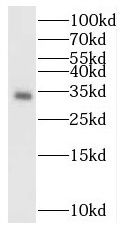
30-36 kDa
APPLICATION
Tested Application
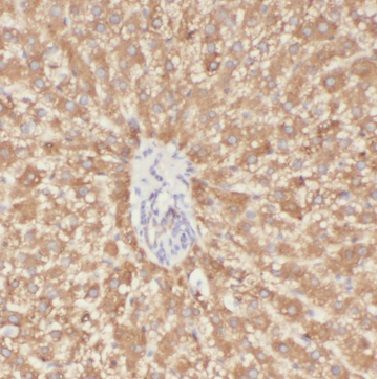
ELISA, WB, IHC, IF, FC
Recommended Dilution
WB: 1:500-1:2000; IHC: 1:20-1:200; IF: 1:20-1:200
UNIPROT INFORMATION
UniProt ID
IMAGES