Our Anti-CXCR4 Polyclonal Antibody, available in a 100µg size, is a versatile and essential tool for researchers exploring the intricate roles of CXCR4, a chemokine receptor, in immune cell migration, hematopoiesis, and cancer metastasis.
As a polyclonal antibody, it offers enhanced sensitivity and versatility, enabling you to delve deep into the molecular mechanisms underlying chemokine receptor signaling. We have rigorously validated the specificity of this antibody to ensure precise and reproducible results in your experiments.
Its compact size allows for a wide range of applications, from immunoprecipitation to flow cytometry. Whether you're unraveling the secrets of chemokine receptor function or exploring therapeutic targets, our Anti-CXCR4 Polyclonal Antibody is a trusted resource that will advance your scientific investigations. Trust in its quality to propel your research forward.
Product Name
CXCR4 antibody
Size
100µg
Form
liquid
Purification
Immunogen affinity purified
Purity
≥95% as determined by SDS-PAGE
Host
Rabbit
Clonality
polyclonal
Isotype
IgG
Storage
PBS with 0.02% sodium azide and 50% glycerol pH 7.3, -20℃ for 12 months (Avoid repeated freeze / thaw cycles.)
BACKGROUND
This gene encodes a CXC chemokine receptor specific for stromal cell-derived factor-1. The protein has 7 transmembrane regions and is located on the cell surface. It acts with the CD4 protein to support HIV entry into cells and is also highly expressed in breast cancer cells. Mutations in this gene have been associated with WHIM (warts, hypogammaglobulinemia, infections, and myelokathexis) syndrome. Alternate transcriptional splice variants, encoding different isoforms, have been characterized.
PBS with 0.02% sodium azide and 50% glycerol pH 7.3, -20℃ for 12 months (Avoid repeated freeze / thaw cycles.)
BACKGROUND
This gene encodes a CXC chemokine receptor specific for stromal cell-derived factor-1. The protein has 7 transmembrane regions and is located on the cell surface. It acts with the CD4 protein to support HIV entry into cells and is also highly expressed in breast cancer cells. Mutations in this gene have been associated with WHIM (warts, hypogammaglobulinemia, infections, and myelokathexis) syndrome. Alternate transcriptional splice variants, encoding different isoforms, have been characterized.


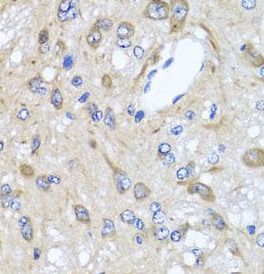 Immunohistochemistry of paraffin-embedded rat brain using FNab02102(CXCR4 antibody) at dilution of 1:100
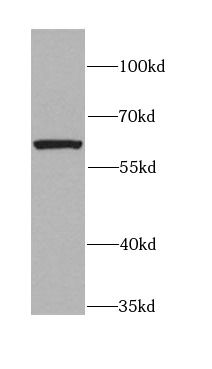 rat spleen tissue were subjected to SDS PAGE followed by western blot with FNab02102( CXCR4 Antibody) at dilution of 1:1000