FineTest
SKU:FNab09934
anti- CTSC antibody
anti- CTSC antibody
Couldn't load pickup availability
The anti-CTSC antibody, available in a 100µg size, is a valuable tool for researchers investigating the functions of Cathepsin C (CTSC) in various cellular processes, particularly in lysosomal proteolysis and protein degradation.
This polyclonal antibody is meticulously designed to target CTSC with exceptional specificity and sensitivity, making it ideal for a wide range of applications, including Western blotting, immunohistochemistry, and flow cytometry.
Our anti-CTSC antibody is sourced from high-quality materials and undergoes rigorous validation to ensure reliable and reproducible results. It is a trusted choice for researchers exploring the molecular mechanisms of lysosomal enzymes, protein turnover, and cellular homeostasis.
The 100µg size of this antibody provides researchers with an ample supply for multiple experiments, and it is compatible with various sample types, including cell lysates and tissue sections. Whether studying lysosomal biology, protease activity, or protein degradation pathways, this antibody is an invaluable resource for your research.
Product Name
CTSC antibody
Size
100µg
Form
liquid
Purification
Immunogen affinity purified
Purity
≥95% as determined by SDS-PAGE
Host
Rabbit
Clonality
polyclonal
Isotype
IgG
Storage
PBS with 0.02% sodium azide and 50% glycerol pH 7.3, -20℃ for 12 months(Avoid repeated freeze / thaw cycles.)
BACKGROUND
This gene encodes a member of the peptidase C1 family and lysosomal cysteine proteinase that appears to be a central coordinator for activation of many serine proteinases in cells of the immune system. Alternative splicing results in multiple transcript variants, at least one of which encodes a preproprotein that is proteolytically processed to generate heavy and light chains that form a disulfide-linked dimer. A portion of the propeptide acts as an intramolecular chaperone for the folding and stabilization of the mature enzyme. This enzyme requires chloride ions for activity and can degrade glucagon. Defects in the encoded protein have been shown to be a cause of Papillon-Lefevre syndrome, an autosomal recessive disorder characterized by palmoplantar keratosis and periodontitis.
IMMUNOGEN INFORMATION
Immunogen
Cathepsin C
Synonyms
CPPI, DPP-I, DPP1, DPPI, HMS, JP, JPD, PALS, PDON1, PLS
Observed MW
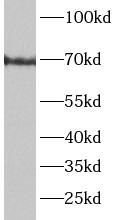
70 kDa
APPLICATION
Tested Application
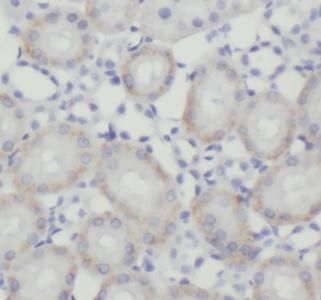
ELISA, WB, IHC
Recommended Dilution
WB: 1:500 - 1:2000; IHC: 1:50 - 1:200
UNIPROT INFORMATION
UniProt ID
IMAGES