FineTest
SKU:FNab10247
anti- HYOU1 antibody
anti- HYOU1 antibody
Couldn't load pickup availability
Unleash the power of hypoxia response and cellular stress research with our Anti-HYOU1 Antibody, available in a 100µg size. HYOU1, a key player in the cellular response to hypoxia, is involved in cell survival and adaptation to low oxygen levels. Here are the key features: HYOU1 Antibody Highlights: Precise Targeting: This antibody is rigorously validated for specific recognition of HYOU1, ensuring accurate and reliable results in your studies of hypoxia responses, cellular adaptation, and stress tolerance. Versatile Applications: Compatible with a variety of research techniques, including Western blotting, immunoprecipitation, and immunohistochemistry. It's ideal for researchers studying hypoxia biology, cellular stress, and adaptive mechanisms. High Sensitivity: The Anti-HYOU1 Antibody is optimized for superior sensitivity, enabling you to detect low-abundance HYOU1 in complex cellular samples, facilitating a deeper understanding of cellular adaptation to stress. Broad Research Impact: From unraveling hypoxia-related diseases to exploring stress-induced cell survival, this antibody is a valuable tool for researchers in cell biology, molecular biology, and disease mechanisms. Incorporate the Anti-HYOU1 Antibody into your research to gain deeper insights into the role of HYOU1 in cellular responses to hypoxia and stress. Its precision and reliability make it an indispensable asset for scientists and researchers in diverse fields.
Product Name
HYOU1 antibody
Size
100µg
Form
liquid
Purification
Immunogen affinity purified
Purity
≥95% as determined by SDS-PAGE
Host
Rabbit
Clonality
polyclonal
Isotype
IgG
Storage
PBS with 0.02% sodium azide and 50% glycerol pH 7.3, -20℃ for 12 months(Avoid repeated freeze / thaw cycles.)
BACKGROUND
The protein encoded by this gene belongs to the heat shock protein 70 family. This gene uses alternative transcription start sites. A cis-acting segment found in the 5' UTR is involved in stress-dependent induction, resulting in the accumulation of this protein in the endoplasmic reticulum (ER) under hypoxic conditions. The protein encoded by this gene is thought to play an important role in protein folding and secretion in the ER. Since suppression of the protein is associated with accelerated apoptosis, it is also suggested to have an important cytoprotective role in hypoxia-induced cellular perturbation. This protein has been shown to be up-regulated in tumors, especially in breast tumors, and thus it is associated with tumor invasiveness. This gene also has an alternative translation initiation site, resulting in a protein that lacks the N-terminal signal peptide. This signal peptide-lacking protein, which is only 3 amino acids shorter than the mature protein in the ER, is thought to have a housekeeping function in the cytosol. In rat, this protein localizes to both the ER by a carboxy-terminal peptide sequence and to mitochondria by an amino-terminal targeting signal. Alternative splicing results in multiple transcript variants.
IMMUNOGEN INFORMATION
Immunogen
Hypoxia up-regulated protein 1
Synonyms
GRP-170, Grp170, HSP12A, ORP-150, ORP150
Observed MW
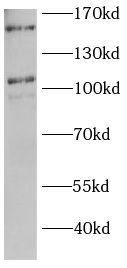
110kDa,150kDa
APPLICATION
Tested Application
ELISA, WB, IHC
Recommended Dilution
WB: 1:500 - 1:2000; IHC: 1:50 - 1:200
UNIPROT INFORMATION
UniProt ID
IMAGES
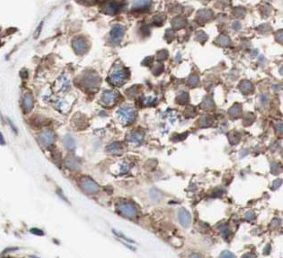
Immunohistochemistry of paraffin-embedded mouse testis tissue slide using FNab10247(HYOU1 Antibody) at dilution of 1:100
MCF7 cells were subjected to SDS PAGE followed by western blot with FNab10247(HYOU1 antibody) at dilution of 1:1000