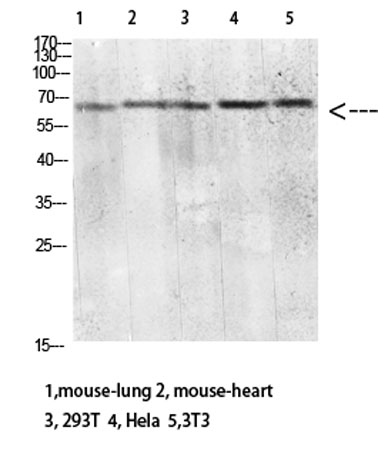
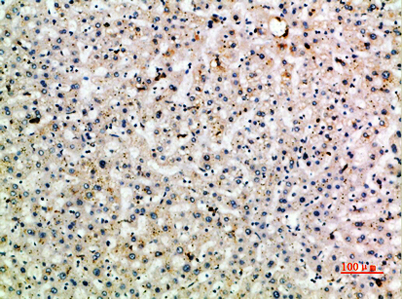
Synthetic peptide from human protein at AA range: 271-320
Storage:
Rabbit
Storage:
-20°C/1 year
Clonality:
Polyclonal
Isotype:
IgG
Concentration:
1 mg/ml
Observed Band:
60kD
GeneID(Human):
10332
Human Swiss-Prot No:
Q9H2X3
Cellular localization:
[Isoform 1]: Cell membrane ; Single-pass type II membrane protein .; [Isoform 2]: Cell membrane ; Single-pass type II membrane protein .; [Isoform 3]: Cell membrane ; Single-pass type II membrane protein .; [Isoform 5]: Secreted .; [Isoform 6]: Secreted .; [Isoform 7]: Secreted .; [Isoform 10]: Secreted .
Background:
This gene encodes a transmembrane receptor and is often referred to as L-SIGN because of its expression in the endothelial cells of the lymph nodes and liver. The encoded protein is involved in the innate immune system and recognizes numerous evolutionarily divergent pathogens ranging from parasites to viruses, with a large impact on public health. The protein is organized into three distinct domains: an N-terminal transmembrane domain, a tandem-repeat neck domain and C-type lectin carbohydrate recognition domain. The extracellular region consisting of the C-type lectin and neck domains has a dual function as a pathogen recognition receptor and a cell adhesion receptor by binding carbohydrate ligands on the surface of microbes and endogenous cells. The neck region is important for homo-oligomerization which allows the receptor to bind multivalent ligands with high avidity. Variations