Synthetic peptide from human protein at AA range: 460-520
Storage:
Rabbit
Storage:
-20°C/1 year
Clonality:
Polyclonal
Isotype:
IgG
Concentration:
1 mg/ml
Observed Band:
72kD
GeneID(Human):
9055
Human Swiss-Prot No:
O43663
Cellular localization:
Nucleus . Cytoplasm. Cytoplasm, cytoskeleton, spindle pole . Midbody . Chromosome . Colocalized with KIF20B in the nucleus of bladder carcinoma cells at the interphase. Colocalized with KIF20B in bladder carcinoma cells at prophase, metaphase, early anaphase, at the midzone in late anaphase and at the contractile ring in telophase (PubMed:17409436). Predominantly localized to the nucleus of interphase cells. During mitosis becomes associated with the mitotic spindle poles and localizes with the cell midbody during cytokinesis. Co-localizes with PRC1 in early mitosis and at the spindle midzone from anaphase B to telophase (PubMed:15297875, PubMed:15625105). .
Background:
This gene encodes a protein that is involved in cytokinesis. The protein is present at high levels during the S and G2/M phases of mitosis but its levels drop dramatically when the cell exits mitosis and enters the G1 phase. It is located in the nucleus during interphase, becomes associated with mitotic spindles in a highly dynamic manner during mitosis, and localizes to the cell mid-body during cytokinesis. This protein has been shown to be a substrate of several cyclin-dependent kinases (CDKs). It is necessary for polarizing parallel microtubules and concentrating the factors responsible for contractile ring assembly. Alternative splicing results in multiple transcript variants. [provided by RefSeq, Jun 2012],


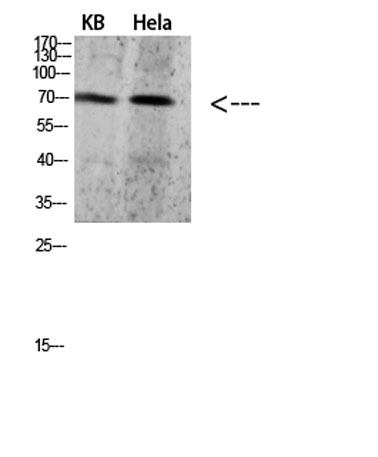 Western blot analysis of 293T Hela 3T3 lysate, antibody was diluted at 500. Secondary antibody(catalog#:RS0002) was diluted at 1:20000
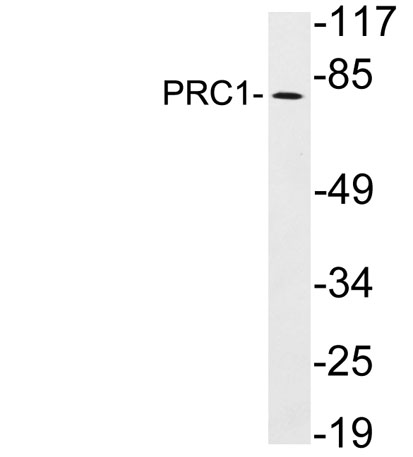 Western blot analysis of lysates from HeLa cells, using PRC1 antibody.
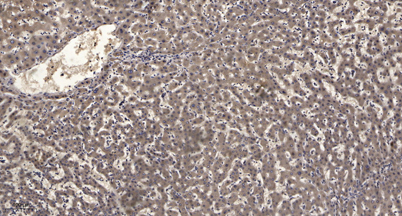 Immunohistochemical analysis of paraffin-embedded human liver cancer. 1, Antibody was diluted at 1:200(4° overnight). 2, Tris-EDTA,pH9.0 was used for antigen retrieval. 3,Secondary antibody was diluted at 1:200(room temperature, 45min).