ADAM10; KUZ; MADM; Disintegrin and metalloproteinase domain-containing protein 10; ADAM 10; CDw156; Kuzbanian protein homolog; Mammalian disintegrin-metalloprotease; CD156c
Applications:
WB;IHC;IF;ELISA
Recommended Dilutions:
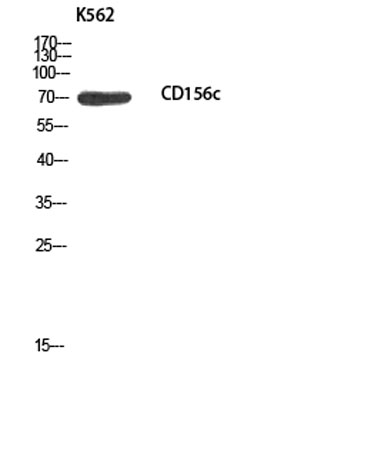
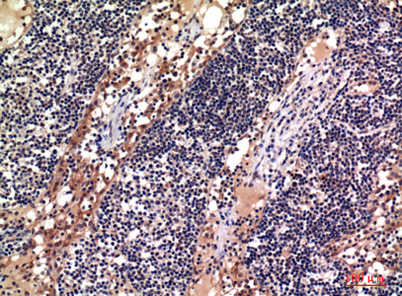
Western Blot: 1/500 - 1/2000. IHC-p: 1:100-1:300. ELISA: 1/10000. Not yet tested in other applications.
Immunogen:
Synthesized peptide derived from the Internal region of human CD156c.
Storage:
Rabbit
Storage:
-20°C/1 year
Clonality:
Polyclonal
Isotype:
IgG
Concentration:
1 mg/ml
Observed Band:
70kD
GeneID(Human):
102
Human Swiss-Prot No:
O14672
Cellular localization:
Cell membrane ; Single-pass type I membrane protein . Golgi apparatus membrane ; Single-pass type I membrane protein . Cytoplasmic vesicle, clathrin-coated vesicle . Cell projection, axon . Cell projection, dendrite . Cell junction, adherens junction . Cytoplasm . Is localized in the plasma membrane but is also expressed in the Golgi apparatus and in clathrin-coated vesicles derived likely from the Golgi (PubMed:12475894). During long term depression, it is recruited to the cell membrane by DLG1 (PubMed:23676497). The immature form is mainly located near cytoplasmic fibrillar structures, while the mature form is predominantly located at zonula adherens and the cell membrane (PubMed:30463011). The localization and clustering of mature ADAM10 to zonula adherens is regulated by AFDN, TSPAN33,
Background:
ADAM metallopeptidase domain 10(ADAM10) Homo sapiens Members of the ADAM family are cell surface proteins with a unique structure possessing both potential adhesion and protease domains. This gene encodes and ADAM family member that cleaves many proteins including TNF-alpha and E-cadherin. Alternate splicing results in multiple transcript variants encoding different proteins that may undergo similar processing. [provided by RefSeq, Feb 2016],