The antiserum was produced against synthesized peptide derived from human KIF20B. AA range:1771-1820
Storage:
Rabbit
Storage:
-20°C/1 year
Clonality:
Polyclonal
Isotype:
IgG
Concentration:
1 mg/ml
Observed Band:
210kD
GeneID(Human):
9585
Human Swiss-Prot No:
Q96Q89
Cellular localization:
Nucleus . Cytoplasm, cytoskeleton, microtubule organizing center, centrosome . Nucleus, nucleolus . Nucleus, nucleoplasm . Cytoplasm, cytoskeleton, spindle . Cytoplasm, cytoskeleton, spindle pole . Midbody . Cell projection, axon . Cell projection, growth cone . Localizes mainly in the nucleus during interphase although it is also detected in the cytoplasm without clear association with microtubules (PubMed:12740395). Localized to the central spindle during cytokinetic furrowing and with the midbody during abscission (PubMed:12740395, PubMed:17409436). A 2-3 fold expression increase is seen as cells progress from G1 to G2/M phase (PubMed:12740395). During prophase and metaphase it is found throughout the cytoplasm and at anaphase accumulates at the midplan of the cell and forms a distinct
Background:
KIF20B (Kinesin Family Member 20B) is a Protein Coding gene. Among its related pathways are Golgi-to-ER retrograde transport and Factors involved in megakaryocyte development and platelet production. GO annotations related to this gene include ATPase activity and microtubule motor activity. An important paralog of this gene is KIF23.


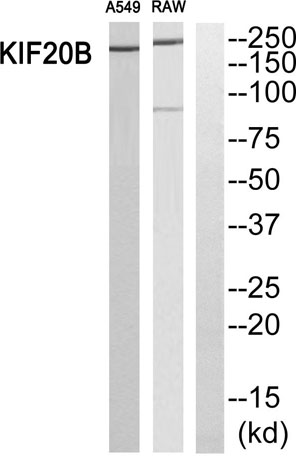 Western blot analysis of KIF20B Antibody. The lane on the right is blocked with the KIF20B peptide.
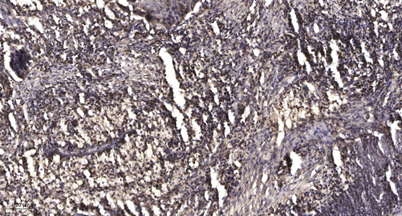 Immunohistochemical analysis of paraffin-embedded human Squamous cell carcinoma of lung. 1, Antibody was diluted at 1:200(4° overnight). 2, Tris-EDTA,pH9.0 was used for antigen retrieval. 3,Secondary antibody was diluted at 1:200(room temperature, 45min).