

ELK Biotechnology
SKU:ES7789
Atg4C Rabbit Polyclonal Antibody
Atg4C Rabbit Polyclonal Antibody
Regular price
$248.00 USD
Regular price
Sale price
$248.00 USD
Unit price
per
Shipping calculated at checkout.
Couldn't load pickup availability
Atg4C Rabbit Polyclonal Antibody
Overview
-
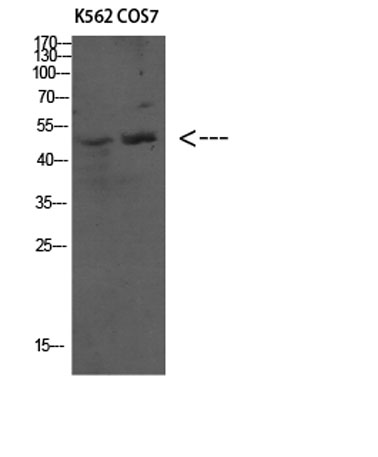 Western Blot analysis of various cells using Antibody diluted at 1:1000. Secondary antibody(catalog#:RS0002) was diluted at 1:20000
 -
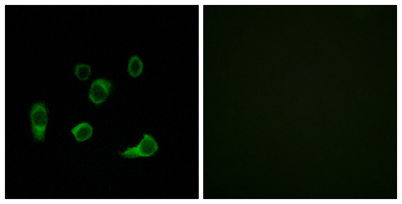 Immunofluorescence analysis of HUVEC cells, using ATG4C Antibody. The picture on the right is blocked with the synthesized peptide.
 -
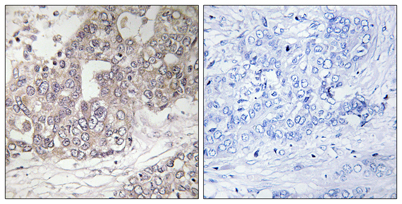 Immunohistochemistry analysis of paraffin-embedded human liver carcinoma tissue, using ATG4C Antibody. The picture on the right is blocked with the synthesized peptide.
 -
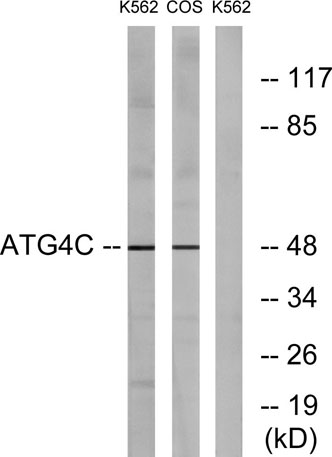 Western blot analysis of lysates from K562 and COS7 cells, using ATG4C Antibody. The lane on the right is blocked with the synthesized peptide.
