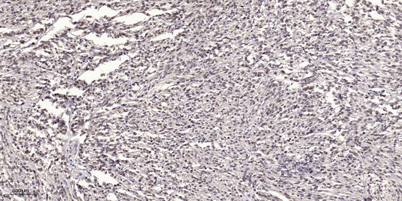
Immunohistochemistry: 1/100 - 1/300. ELISA: 1/10000. Not yet tested in other applications.
Immunogen:
Synthesized phospho-peptide around the phosphorylation site of human MYLK (phospho Tyr464)
Storage:
Rabbit
Storage:
-20°C/1 year
Clonality:
Polyclonal
Isotype:
IgG
Concentration:
1 mg/ml
GeneID(Human):
4638
Human Swiss-Prot No:
Q15746
Cellular localization:
Cytoplasm . Cell projection, lamellipodium . Cleavage furrow . Cytoplasm, cytoskeleton, stress fiber . Localized to stress fibers during interphase and to the cleavage furrow during mitosis. .
Background:
myosin light chain kinase(MYLK) Homo sapiens This gene, a muscle member of the immunoglobulin gene superfamily, encodes myosin light chain kinase which is a calcium/calmodulin dependent enzyme. This kinase phosphorylates myosin regulatory light chains to facilitate myosin interaction with actin filaments to produce contractile activity. This gene encodes both smooth muscle and nonmuscle isoforms. In addition, using a separate promoter in an intron in the 3' region, it encodes telokin, a small protein identical in sequence to the C-terminus of myosin light chain kinase, that is independently expressed in smooth muscle and functions to stabilize unphosphorylated myosin filaments. A pseudogene is located on the p arm of chromosome 3. Four transcript variants that produce four isoforms of the calcium/calmodulin dependent enzyme have been identified as well as two transcripts that produce two isoforms of telokin. Additional variants have been