

ELK Biotechnology
SKU:ES6043
NCAM-L1 (phospho Ser1181) Rabbit Polyclonal Antibody
NCAM-L1 (phospho Ser1181) Rabbit Polyclonal Antibody
Regular price
$248.00 USD
Regular price
Sale price
$248.00 USD
Unit price
per
Shipping calculated at checkout.
Couldn't load pickup availability
NCAM-L1 (phospho Ser1181) Rabbit Polyclonal Antibody
Overview
-
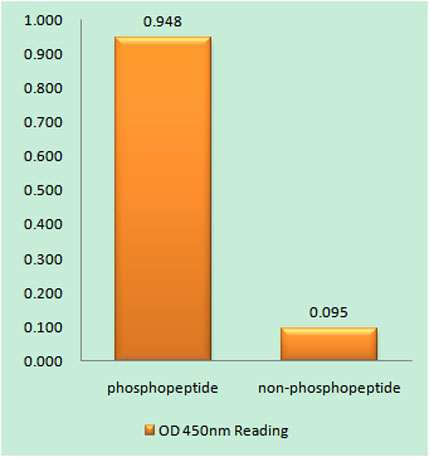 Enzyme-Linked Immunosorbent Assay (Phospho-ELISA) for Immunogen Phosphopeptide (Phospho-left) and Non-Phosphopeptide (Phospho-right), using CD171/N-CAML1 (Phospho-Ser1181) Antibody
 -
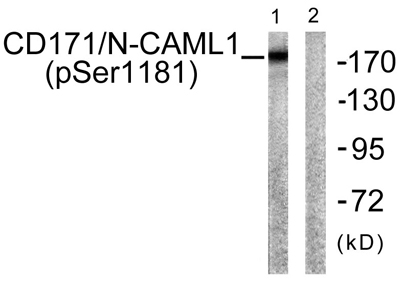 Western blot analysis of lysates from K562 cells, using CD171/N-CAML1 (Phospho-Ser1181) Antibody. The lane on the right is blocked with the phospho peptide.
 -
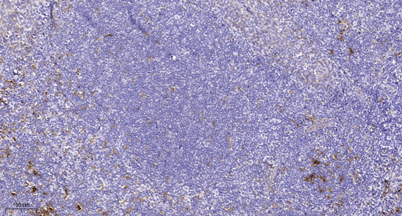 Immunohistochemical analysis of paraffin-embedded human tonsil. 1, Tris-EDTA,pH9.0 was used for antigen retrieval. 2 Antibody was diluted at 1:200(4° overnight.3,Secondary antibody was diluted at 1:200(room temperature, 45min).
