

ELK Biotechnology
SKU:ES4444
Cdk9 (phospho Thr186) Rabbit Polyclonal Antibody
Cdk9 (phospho Thr186) Rabbit Polyclonal Antibody
Regular price
$248.00 USD
Regular price
Sale price
$248.00 USD
Unit price
per
Shipping calculated at checkout.
Couldn't load pickup availability
Cdk9 (phospho Thr186) Rabbit Polyclonal Antibody
Overview
-
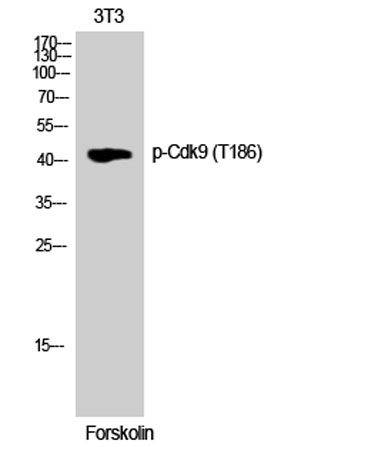 Western Blot analysis of 3T3 cells using Phospho-Cdk9 (T186) Polyclonal Antibody cells nucleus extracted by Minute TM Cytoplasmic and Nuclear Fractionation kit (SC-003,Inventbiotech,MN,USA).
 -
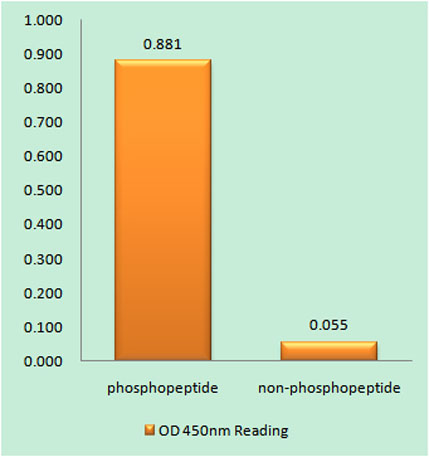 Enzyme-Linked Immunosorbent Assay (Phospho-ELISA) for Immunogen Phosphopeptide (Phospho-left) and Non-Phosphopeptide (Phospho-right), using CDK9 (Phospho-Thr186) Antibody
 -
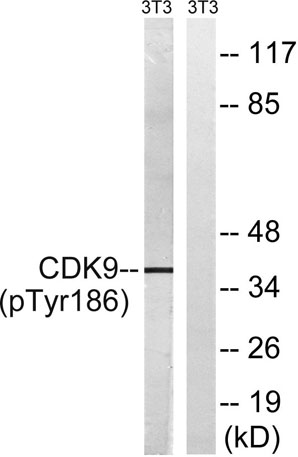 Western blot analysis of lysates from NIH/3T3 cells treated with Forskolin 40nM 30', using CDK9 (Phospho-Thr186) Antibody. The lane on the right is blocked with the phospho peptide.
