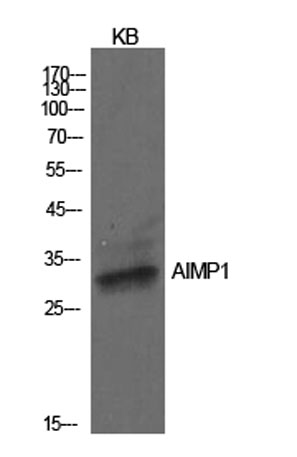
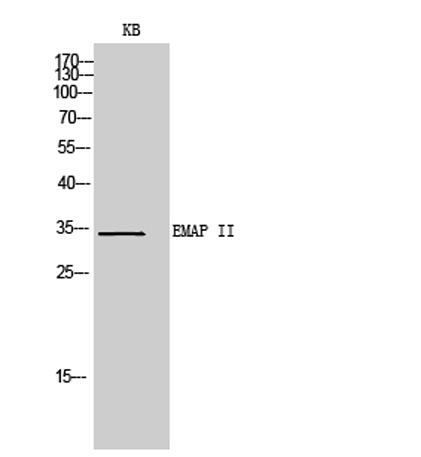
Western Blot: 1/500 - 1/2000. ELISA: 1/10000. Not yet tested in other applications.
Immunogen:
The antiserum was produced against synthesized peptide derived from the Internal region of human AIMP1. AA range:91-140
Storage:
Rabbit
Storage:
-20°C/1 year
Clonality:
Polyclonal
Isotype:
IgG
Concentration:
1 mg/ml
Observed Band:
34kD
GeneID(Human):
9255
Human Swiss-Prot No:
Q12904
Cellular localization:
Nucleus . Cytoplasm, cytosol . Secreted . Endoplasmic reticulum . Golgi apparatus . Enriched in secretory vesicles of pancreatic alpha cells and secreted from the pancreas in response to low glucose levels (By similarity). Secreted in response to hypoxia (PubMed:10850427). Also secreted in response to both apoptotic and necrotic cell death. .
Background:
The protein encoded by this gene is a cytokine that is specifically induced by apoptosis, and it is involved in the control of angiogenesis, inflammation, and wound healing. The release of this cytokine renders the tumor-associated vasculature sensitive to tumor necrosis factor. The precursor protein is identical to the p43 subunit, which is associated with the multi-tRNA synthetase complex, and it modulates aminoacylation activity of tRNA synthetase in normal cells. This protein is also involved in the stimulation of inflammatory responses after proteolytic cleavage in tumor cells. Multiple transcript variants encoding different isoforms have been found for this gene. A pseudogene has been identified on chromosome 20. [provided by RefSeq, Dec 2008],