SKP1; EMC19; OCP2; SKP1A; TCEB1L; S-phase kinase-associated protein 1; Cyclin-A/CDK2-associated protein p19; Organ of Corti protein 2; OCP-2; Organ of Corti protein II; OCP-II; RNA polymerase II elongation factor-like protein; SIII; Transcr
Applications:
WB;IHC;IF;ELISA
Recommended Dilutions:
Western Blot: 1/500 - 1/2000. Immunohistochemistry: 1/100 - 1/300. ELISA: 1/5000. Not yet tested in other applications.
Immunogen:
The antiserum was produced against synthesized peptide derived from human SKP1A/p19. AA range:41-90
Storage:
Rabbit
Storage:
-20°C/1 year
Clonality:
Polyclonal
Isotype:
IgG
Concentration:
1 mg/ml
Observed Band:
19kD
GeneID(Human):
6500
Human Swiss-Prot No:
P63208
Cellular localization:
nucleus,nucleoplasm,cytoplasm,centrosome,cytosol,SCF ubiquitin ligase complex,Cul7-RING ubiquitin ligase complex,PcG protein complex,extracellular exosome,
Background:
This gene encodes a component of SCF complexes, which are composed of this protein, cullin 1, a ring-box protein, and one member of the F-box family of proteins. This protein binds directly to the F-box motif found in F-box proteins. SCF complexes are involved in the regulated ubiquitination of specific protein substrates, which targets them for degradation by the proteosome. Specific F-box proteins recognize different target protein(s), and many specific SCF substrates have been identified including regulators of cell cycle progression and development. Studies have also characterized the protein as an RNA polymerase II elongation factor. Alternative splicing of this gene results in two transcript variants. A related pseudogene has been identified on chromosome 7. [provided by RefSeq, Jul 2008],


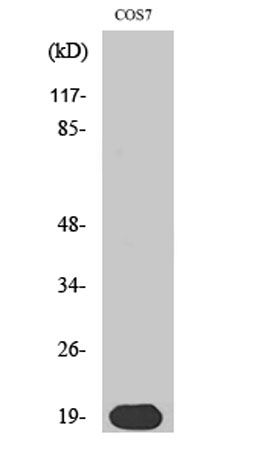 Western Blot analysis of various cells using Skp1 p19 Polyclonal Antibody
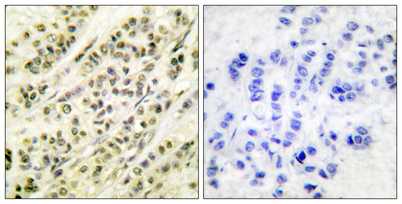 Immunohistochemistry analysis of paraffin-embedded human breast carcinoma tissue, using SKP1A/p19 Antibody. The picture on the right is blocked with the synthesized peptide.
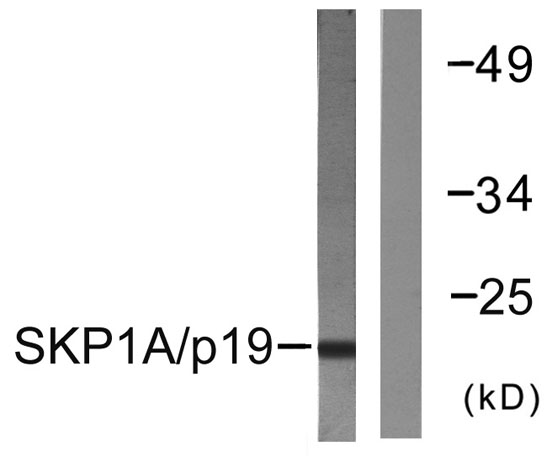 Western blot analysis of lysates from COS7 cells, using SKP1A/p19 Antibody. The lane on the right is blocked with the synthesized peptide.