PML; MYL; RNF71; TRIM19; Protein PML; Promyelocytic leukemia protein; RING finger protein 71; Tripartite motif-containing protein 19
Applications:
WB;IHC;IF;ELISA
Recommended Dilutions:
Western Blot: 1/500 - 1/2000. Immunohistochemistry: 1/100 - 1/300. Immunofluorescence: 1/200 - 1/1000. ELISA: 1/10000. Not yet tested in other applications.
Immunogen:
The antiserum was produced against synthesized peptide derived from human PML. AA range:11-60
Storage:
Rabbit
Storage:
-20°C/1 year
Clonality:
Polyclonal
Isotype:
IgG
Concentration:
1 mg/ml
Observed Band:
98kD
GeneID(Human):
5371
Human Swiss-Prot No:
P29590
Cellular localization:
Nucleus. Nucleus, nucleoplasm. Cytoplasm . Nucleus, PML body . Nucleus, nucleolus. Endoplasmic reticulum membrane ; Peripheral membrane protein ; Cytoplasmic side . Early endosome membrane; Peripheral membrane protein; Cytoplasmic side. Isoform PML-1 can shuttle between the nucleus and cytoplasm. Isoform PML-2, isoform PML-3, isoform PML-4, isoform PML-5 and isoform PML-6 are nuclear isoforms whereas isoform PML-7 and isoform PML-14 lacking the nuclear localization signal are cytoplasmic isoforms. Detected in the nucleolus after DNA damage. Acetylation at Lys-487 is essential for its nuclear localization. Within the nucleus, most of PML is expressed in the diffuse nuclear fraction of the nucleoplasm and only a small fraction is found in the matrix-associated nuclear bodies (PML-NBs). The t
Background:
The protein encoded by this gene is a member of the tripartite motif (TRIM) family. The TRIM motif includes three zinc-binding domains, a RING, a B-box type 1 and a B-box type 2, and a coiled-coil region. This phosphoprotein localizes to nuclear bodies where it functions as a transcription factor and tumor suppressor. Its expression is cell-cycle related and it regulates the p53 response to oncogenic signals. The gene is often involved in the translocation with the retinoic acid receptor alpha gene associated with acute promyelocytic leukemia (APL). Extensive alternative splicing of this gene results in several variations of the protein's central and C-terminal regions; all variants encode the same N-terminus. Alternatively spliced transcript variants encoding different isoforms have been identified. [provided by RefSeq, Jul 2008],


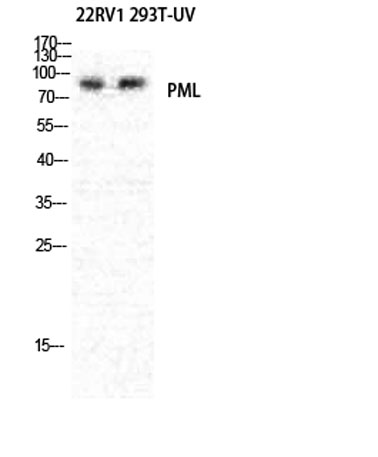 Western Blot analysis of various cells using PML Polyclonal Antibody diluted at 1:1000
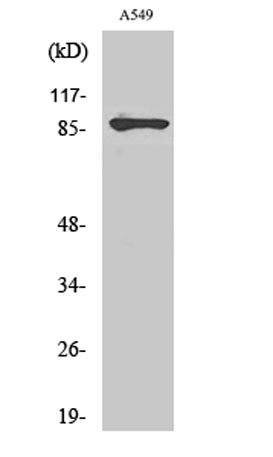 Western Blot analysis of A549 cells using PML Polyclonal Antibody diluted at 1:1000
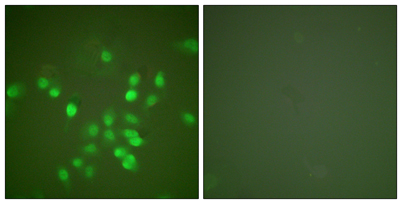 Immunofluorescence analysis of A549 cells, using PML Antibody. The picture on the right is blocked with the synthesized peptide.
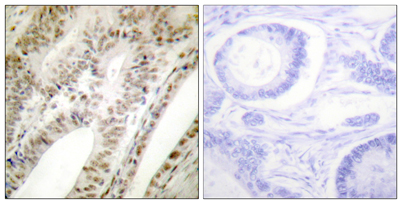 Immunohistochemistry analysis of paraffin-embedded human tonsil tissue, using PML Antibody. The picture on the right is blocked with the synthesized peptide.