MID1; FXY; RNF59; TRIM18; XPRF; Midline-1; Midin; Midline 1 RING finger protein; Putative transcription factor XPRF; RING finger protein 59; Tripartite motif-containing protein 18
Applications:
WB;IHC;IF;ELISA
Recommended Dilutions:
Western Blot: 1/500 - 1/2000. Immunohistochemistry: 1/100 - 1/300. Immunofluorescence: 1/200 - 1/1000. ELISA: 1/40000. Not yet tested in other applications.
Immunogen:
The antiserum was produced against synthesized peptide derived from human TRI18. AA range:71-120
Storage:
Rabbit
Storage:
-20°C/1 year
Clonality:
Polyclonal
Isotype:
IgG
Concentration:
1 mg/ml
Observed Band:
75kD
GeneID(Human):
4281
Human Swiss-Prot No:
O15344
Cellular localization:
Cytoplasm . Cytoplasm, cytoskeleton . Cytoplasm, cytoskeleton, spindle . Microtubule-associated. It is associated with microtubules throughout the cell cycle, co-localizing with cytoplasmic fibers in interphase and with the mitotic spindle and midbodies during mitosis and cytokinesis.
Background:
midline 1(MID1) Homo sapiens The protein encoded by this gene is a member of the tripartite motif (TRIM) family, also known as the 'RING-B box-coiled coil' (RBCC) subgroup of RING finger proteins. The TRIM motif includes three zinc-binding domains, a RING, a B-box type 1 and a B-box type 2, and a coiled-coil region. This protein forms homodimers which associate with microtubules in the cytoplasm. The protein is likely involved in the formation of multiprotein structures acting as anchor points to microtubules. Mutations in this gene have been associated with the X-linked form of Opitz syndrome, which is characterized by midline abnormalities such as cleft lip, laryngeal cleft, heart defects, hypospadias, and agenesis of the corpus callosum. This gene was also the first example of a gene subject to X inactivation in human while escaping it in mouse. Multiple different transcript variants are generated by alternate splicing; however, t


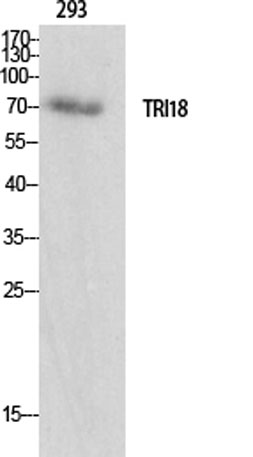 Western Blot analysis of various cells using Midline-1 Polyclonal Antibody
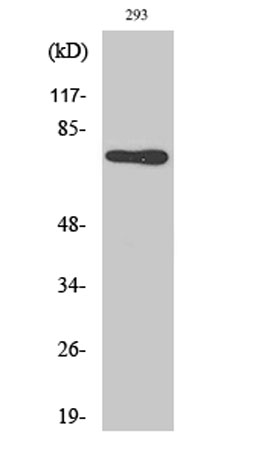 Western Blot analysis of 293 cells using Midline-1 Polyclonal Antibody
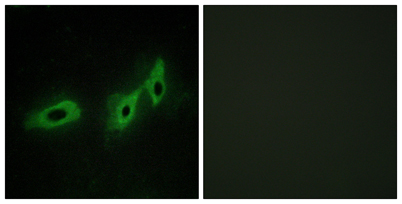 Immunofluorescence analysis of HeLa cells, using TRI18 Antibody. The picture on the right is blocked with the synthesized peptide.
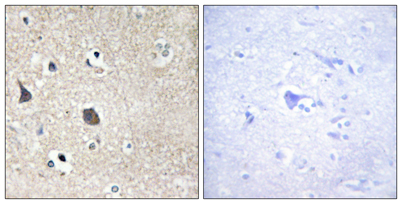 Immunohistochemistry analysis of paraffin-embedded human brain tissue, using TRI18 Antibody. The picture on the right is blocked with the synthesized peptide.