CLOCK; BHLHE8; KIAA0334; Circadian locomoter output cycles protein kaput; hCLOCK; Class E basic helix-loop-helix protein 8; bHLHe8
Applications:
WB;IHC;IF;ELISA
Recommended Dilutions:
Western Blot: 1/500 - 1/2000. Immunohistochemistry: 1/100 - 1/300. ELISA: 1/20000. Not yet tested in other applications.
Immunogen:
The antiserum was produced against synthesized peptide derived from human Clock. AA range:241-290
Storage:
-20°C/1 year
Storage:
Rabbit
Clonality:
Polyclonal
Isotype:
IgG
Concentration:
1 mg/ml
Observed Band:
95kD
GeneID(Human):
9575
Human Swiss-Prot No:
O15516
Cellular localization:
Nucleus . Cytoplasm . Cytoplasm, cytosol . Shuttling between the cytoplasm and the nucleus is under circadian regulation and is ARNTL/BMAL1-dependent. Phosphorylated form located in the nucleus while the nonphosphorylated form found only in the cytoplasm. Sequestered to the cytoplasm in the presence of ID2 (By similarity). Localizes to sites of DNA damage in a H2AX-independent manner. .
Background:
The protein encoded by this gene plays a central role in the regulation of circadian rhythms. The protein encodes a transcription factor of the basic helix-loop-helix (bHLH) family and contains DNA binding histone acetyltransferase activity. The encoded protein forms a heterodimer with ARNTL (BMAL1) that binds E-box enhancer elements upstream of Period (PER1, PER2, PER3) and Cryptochrome (CRY1, CRY2) genes and activates transcription of these genes. PER and CRY proteins heterodimerize and repress their own transcription by interacting in a feedback loop with CLOCK/ARNTL complexes. Polymorphisms in this gene may be associated with behavioral changes in certain populations and with obesity and metabolic syndrome. Alternative splicing results in multiple transcript variants. [provided by RefSeq, Jan 2014],


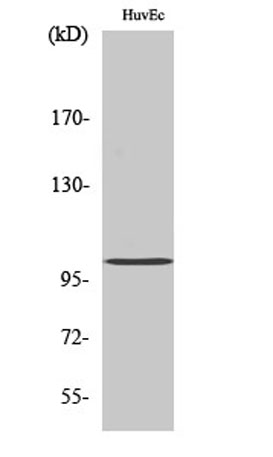 Western Blot analysis of various cells using Clock Polyclonal Antibody
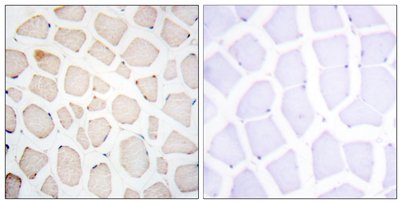 Immunohistochemistry analysis of paraffin-embedded human skeletal muscle tissue, using Clock Antibody. The picture on the right is blocked with the synthesized peptide.
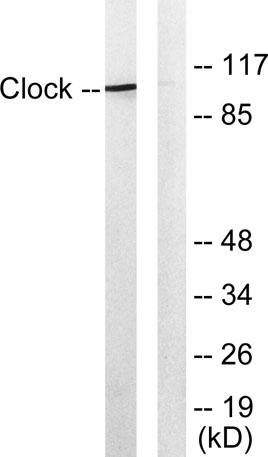 Western blot analysis of lysates from HUVEC cells, using Clock Antibody. The lane on the right is blocked with the synthesized peptide.