Elabscience
SKU:E-AB-F1023G
PE/Cyanine5 Anti-Mouse CD127/IL-7RA Antibody[A7R34]
PE/Cyanine5 Anti-Mouse CD127/IL-7RA Antibody[A7R34]
Couldn't load pickup availability
PE/Cyanine5 Anti-Mouse CD127/IL-7RA Antibody[A7R34]
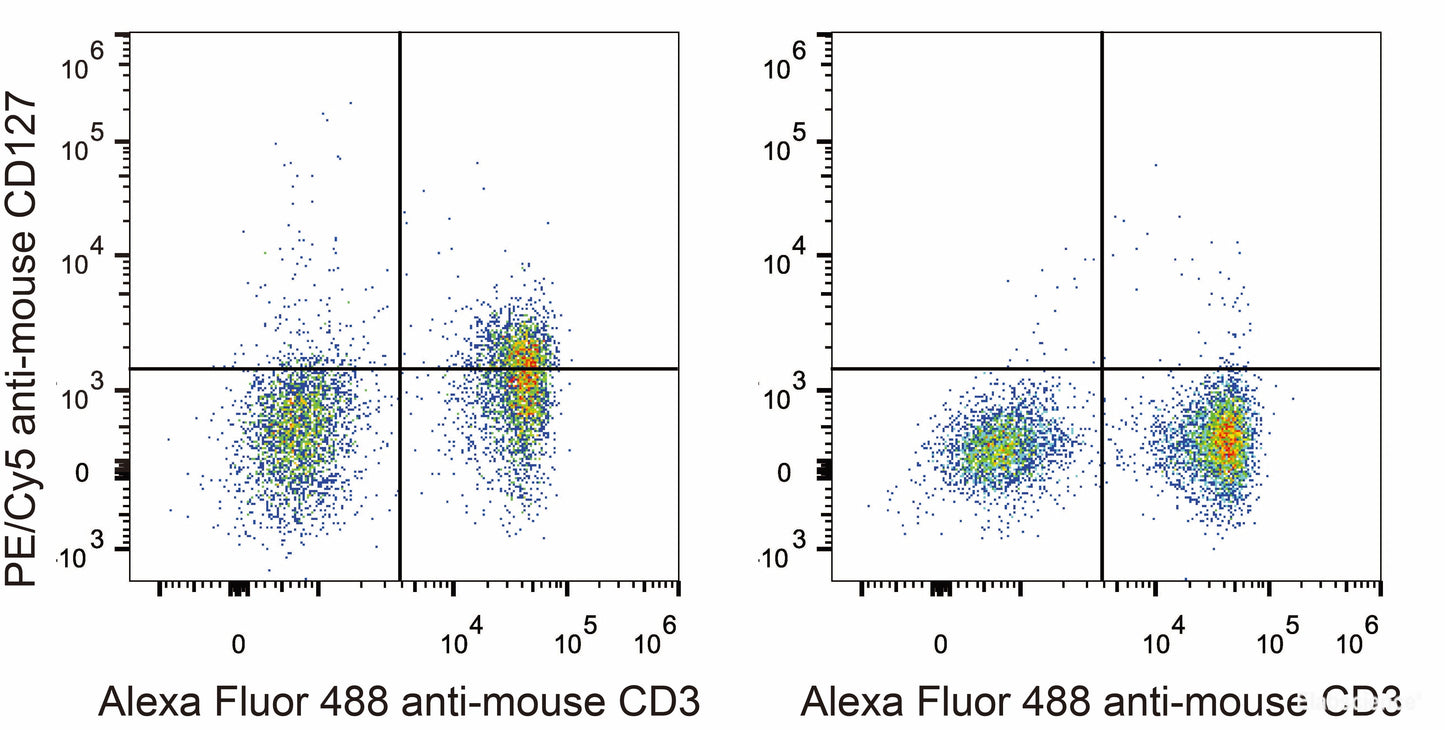
The PE/Cyanine5 Anti-Mouse CD127/IL-7RA Antibody [A7R34] is a highly specific and reliable tool designed for the detection and analysis of CD127/IL-7RA expression in mouse samples. This antibody is conjugated with PE/Cyanine5, a bright and photostable fluorochrome, ensuring accurate and consistent results.
CD127, also known as IL-7RA, is a crucial receptor for interleukin-7 (IL-7), a cytokine essential for lymphocyte development and homeostasis. The expression of CD127/IL-7RA on various immune cell subsets, including T cells, B cells, and natural killer cells, plays a pivotal role in their differentiation, survival, and function.
The PE/Cyanine5 Anti-Mouse CD127/IL-7RA Antibody [A7R34] exhibits exceptional specificity, binding exclusively to CD127/IL-7RA without cross-reactivity to other related antigens. This high specificity ensures accurate identification and quantification of CD127/IL-7RA-expressing cells in complex samples.
Moreover, this antibody offers excellent sensitivity, enabling the detection of low levels of CD127/IL-7RA expression. Its bright PE/Cyanine5 fluorochrome allows for easy visualization and analysis of CD127/IL-7RA-positive cells by flow cytometry or fluorescence microscopy.
The PE/Cyanine5 Anti-Mouse CD127/IL-7RA Antibody [A7R34] is supplied in a ready-to-use format, eliminating the need for time-consuming conjugation procedures. It is provided in a convenient size and concentration, ensuring optimal performance and cost-effectiveness.
In summary, the PE/Cyanine5 Anti-Mouse CD127/IL-7RA Antibody [A7R34] is a reliable and specific tool for the detection and analysis of CD127/IL-7RA expression in mouse samples. Its high sensitivity, bright fluorochrome, and ready-to-use format make it an ideal choice for researchers studying lymphocyte development, immune cell subsets, and cytokine signaling pathways.
Share